
Older and rural people will be key voters, a new survey suggests, as security forces stand by for what both Zanu-PF and the CCC – though not SADC – expect to be a difficult count.


- Zimbabwe chooses between thousands of local-authority candidates, 582 contenders for the national assembly – and 10 people who would be president.
- The challenger, Citizens Coalition for Change, says it fears a stolen election; the ruling Zanu-PF says it fears violence by opposition parties after they lose.
- Polling stations are due to close at 19:00 on Wednesday, with results starting to trickle in on Thursday morning.
After violence and threats, court cases and protests, high-energy rallies and low-key door-to-door slogging, Zimbabwe goes to the polls on Wednesday in what opposition parties in particular have branded a momentous vote.
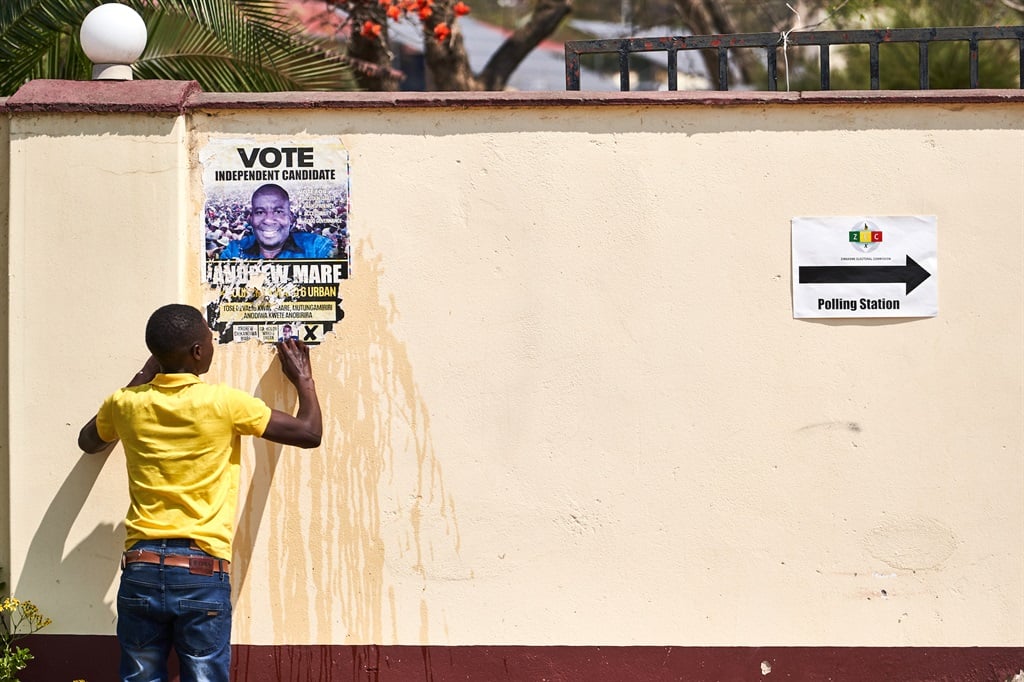
The election is vast: 12 374 polling stations staffed by 150 000 electoral officers to help up to 6.6 million eligible voters decide between thousands of local-authority candidates, 582 people who say they should be in the national assembly – and 10 people who could all potentially be the president.
It is that last race that will be most closely watched, in Zimbabwe and beyond, and which almost everyone fears could trigger violence.
For all the other names on the ballot, the presidency is a battle between Zanu-PF’s incumbent Emmerson Mnangagwa and Nelson Chamisa of the Citizens Coalition for Change (CCC), and both their parties offered dire warnings in the last week of campaigning.
Chamisa urged his supporters to “defend the vote” by sticking around closed voting stations, something the Zimbabwe Electoral Commission (ZEC) said is not allowed.
Zanu-PF cast such “antics” as preparation for post-election violence, for which the state has actively prepared.
The election is supposed to be guaranteed in part by 3 572 local and 136 foreign observers – but Zanu-PF has insisted they must act as observers rather than monitors, and must not interfere. Just how broad the party’s definition of interference is may yet be tested as those observers report on what they see.
Results will start to trickle in on Thursday
Polling stations are due to open at 07:00 and close at 19:00. The first results – initially just a trickle – are expected some 12 hours later.
Only the ZEC may announce results, and it is likely to take a dim view of projections and forecasts.
Just how long the body takes to announce final results remains to be seen, with much depending on challenges that various parties and candidates may bring at various levels of counting.
That there will be disputes about the count is almost inevitable. The Southern African Development Community (SADC) has expressed cautiously-worded optimism that disputes can be peaceful – and, on Tuesday, former Mozambican president Joaquim Chissano took a similar line, praising the two presidential frontrunners for their peace pledges.
At the same time, the United Nations urged them to take disputes to the courts rather than the streets.
But security forces are on standby, the government said, and Zanu-PF, at least, fully expect they will be required.
Older people, and rural people, may have an outsized impact
According to the ZEC, about 43.5% of registered voters are aged 18 to 34.
Parties have worked hard to appeal to young voters throughout electioneering, enrolling the services of pop-culture icons, from musicians to actors, to get their messages to the youth.
However, a survey by Afrobarometer released on the eve of the election indicates that the old will likely vote more than the young.
Younger people are significantly less likely than other age groups in their intention to actually vote, Afrobarometer found.
“Middle-aged citizens record the largest proportion who say they will definitely/probably vote (91% of 36- to 55-year-olds), while youth record the smallest share (78%),” the report said.
The Afrobarometer survey shows that people aged 56 and above are the second most likely to vote, with 86% saying they would.
In the 2018 general elections, the first post-Robert Mugabe and his two-decade rival Morgan Tsvangirai, voter turnout was 85%.
Dzikamai Bere, a transitional justice expert, said this time there might be fewer people voting.
“Fewer Zimbabweans compared to 2018 will likely vote because elections have not brought about change. In 2018, there was euphoria,” he said, speaking at a Southern African Political Economy Series elections preview webinar.
The survey also highlights that more rural voters will turn out than urbanites.
« LIVE | Zimbabwe elections: Cries of voter suppression due to lack of voting material at polling stations
President extends voting to tomorrow »