
Source: Analysts urge MPs to replace Winner-Takes-All with full Proportional Representation — CITEZW

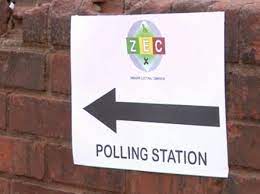
With Parliament reconvening on Tuesday for an emergency sitting to consider Senate amendments to the Constitutional Amendment Bill No. 3 (CAB3), concerned citizens and political analysts have urged lawmakers to address the winner-takes-all nature of Zimbabwe’s First-Past-the-Post (FPTP) electoral system.
Under the current FPTP system, every election produces winners who ‘take everything’ while supporters of losing candidates are effectively excluded from meaningful political participation.
As a result, concerned citizens and political analysts are calling for Zimbabwe to transition to a full proportional representation electoral system, arguing it would make sure every vote counts and that Parliament will more accurately reflect the country’s political diversity.
This call comes amid proposals in CAB3 that would change Zimbabwe’s presidential election process by allowing MPs, rather than citizens through direct universal suffrage, to elect the President.
The proposed indirect presidential election has attracted particular criticism because Parliament itself is elected through the FPTP system.
Analysts argue going through with the FPTP system when the amendments are effected would further marginalise citizens whose preferred parliamentary candidates fail to win constituency seats, effectively denying them any meaningful influence in the election of the Head of State.
Political analyst, Future Msebele, said Parliament should use the current constitutional debate to strengthen rather than weaken Zimbabwe’s democratic architecture.
“Legislators ought to engage CAB3 with sobriety, intellectual rigour and constitutional maturity rather than emotional reaction,” Msebele told CITE.
“The task before Parliament is therefore not to legislate for contemporary political convenience but to design institutions capable of sustaining democratic legitimacy irrespective of who occupies political office.”
Msebele said the proposal for MPs to elect the President deserved “particular scrutiny” because Parliament itself is elected through a winner-takes-all electoral system, creating significant democratic anomalies.
“Under the First-Past-the-Post, representation is fundamentally majoritarian. Electoral victory in a constituency results in a winner-takes-all outcome whereby votes cast for unsuccessful candidates cease to have institutional expression within Parliament,” Msebele said.
He argued that this would effectively silence large sections of the electorate during the presidential selection process.
“Consequently, if MPs become the exclusive electors of the President, citizens whose preferred parliamentary candidates lose constituency contests become effectively excluded from participating in the presidential selection process,” Msebele said.
According to Msebele, the greatest casualties would be supporters of smaller political parties, independent candidates and minority political movements.
“Citizens supporting smaller political formations, independent candidates, minority ideological traditions and emerging political movements may command substantial national support while failing to secure parliamentary seats. Their political preferences would therefore have no meaningful influence in determining the Head of State,” he said.
He warned democracy should not merely reward numerical superiority but should also protect diversity of political opinion.
“Democracy cannot simply be understood as the arithmetic domination of majorities. A democratic order worthy of its name must provide institutional space for minorities, dissenting voices and alternative political traditions.”
Msebele further questioned how independent MPs would exercise the power to elect a President, noting voters often elect independent candidates because of their local credibility rather than any declared national political programme.
“In such circumstances, presidential selection becomes detached from the expressed political intentions of constituents and instead rests upon the personal discretion, ideological inclination or political preference of the elected individual,” he said.
He said this risked transforming representative democracy into “delegated personal authority.”
Instead, Msebele argued that if Zimbabwe intended to adopt an indirect presidential election system, it should first move to a full proportional representation electoral model.
“An electoral college system can only approximate genuine democratic inclusivity if its constituent members are themselves elected through proportional representation,” said the political analyst.
He explained that proportional representation makes sure parliamentary seats reflect the actual level of support political parties receive nationally.
“Under such a system, parties and political formations obtain representation commensurate with the support they receive nationally, thereby making sure that workers, minorities, regional interests, smaller parties and ideological constituencies all retain a voice in the election of the Head of State,” Msebele said.
By contrast, he said, an electoral college drawn from First-Past-the-Post elections simply reproduces existing distortions.
“An electoral college derived from proportional representation reflects society. An electoral college derived from FPTP reflects only territorial victories. The distinction is constitutionally significant.”
Msebele also challenged provisions that allow political parties to recall MPs while retaining constituency-based elections.
He argued such provisions are conceptually compatible only within proportional representation systems where voters primarily elect party lists rather than individual candidates.
“Attempting to preserve a constituency-based electoral model while simultaneously importing mechanisms designed for list-based systems risks producing constitutional inconsistency,” he said.
“If Parliament remains elected through First-Past-the-Post, then there remains a compelling argument that the President should continue to derive legitimacy directly from universal adult suffrage.”
His views echo concerns raised in the Senate by Matabeleland South Senator Nonhlanhla Mlotshwa during debate on CAB3 last week.
Mlotshwa argued that Zimbabwe’s winner-takes-all electoral model has entrenched political exclusion and deepened national divisions.
“One of the greatest weaknesses in our political system is the winner-takes-all nature of our elections,” she said.
“Every election becomes a battle for total control. Every election produces winners who take everything and losers who are excluded from meaningful participation. The result is political polarisation and division. The result is a political culture where compromise becomes impossible.”
She urged Zimbabwe to seriously consider transitioning to a full proportional representation system.
“I therefore submit that Zimbabwe should seriously consider moving towards a full proportional representation electoral system,” Mlotshwa said, adding such a system would make sure every vote contributes to representation regardless of where a voter lives or whether their preferred candidate wins a constituency.
“A proportional representation system ensures that every vote counts. It allows broader representation, accommodates diverse political opinions, reduces the politics of exclusion and lowers the stakes of elections because political participation is no longer an all-or-nothing exercise.”
She argued that reducing political tensions required expanding participation rather than concentrating political power.
“The answer to political tension is not concentration of power. The answer is broader participation in power.”
Mlotshwa said proportional representation would produce a Parliament that genuinely reflects Zimbabwe’s political diversity.
“No citizen should feel that their vote has been wasted. No region should feel permanently excluded. No political opinion should be rendered irrelevant simply because it did not win a particular constituency. That is how mature democracies build consensus. That is how nations strengthen legitimacy.|
The senator also questioned the continued appointment of Senators by the President, arguing that if appointments remain part of Zimbabwe’s constitutional framework, they should reflect the balance expressed by voters during elections.
She noted the 2023 Senate election produced representation for both the ruling party and the opposition, demonstrating that Zimbabweans voted for political diversity rather than one-party dominance.
“In my respectful view, appointments should not overwhelmingly benefit one political side while excluding another,” she said.
“If the electoral outcome represented both Government and Opposition, then any system of appointments should respect that reality.”
Tshabangu denies plot to oust Bulawayo Mayor Coltart »