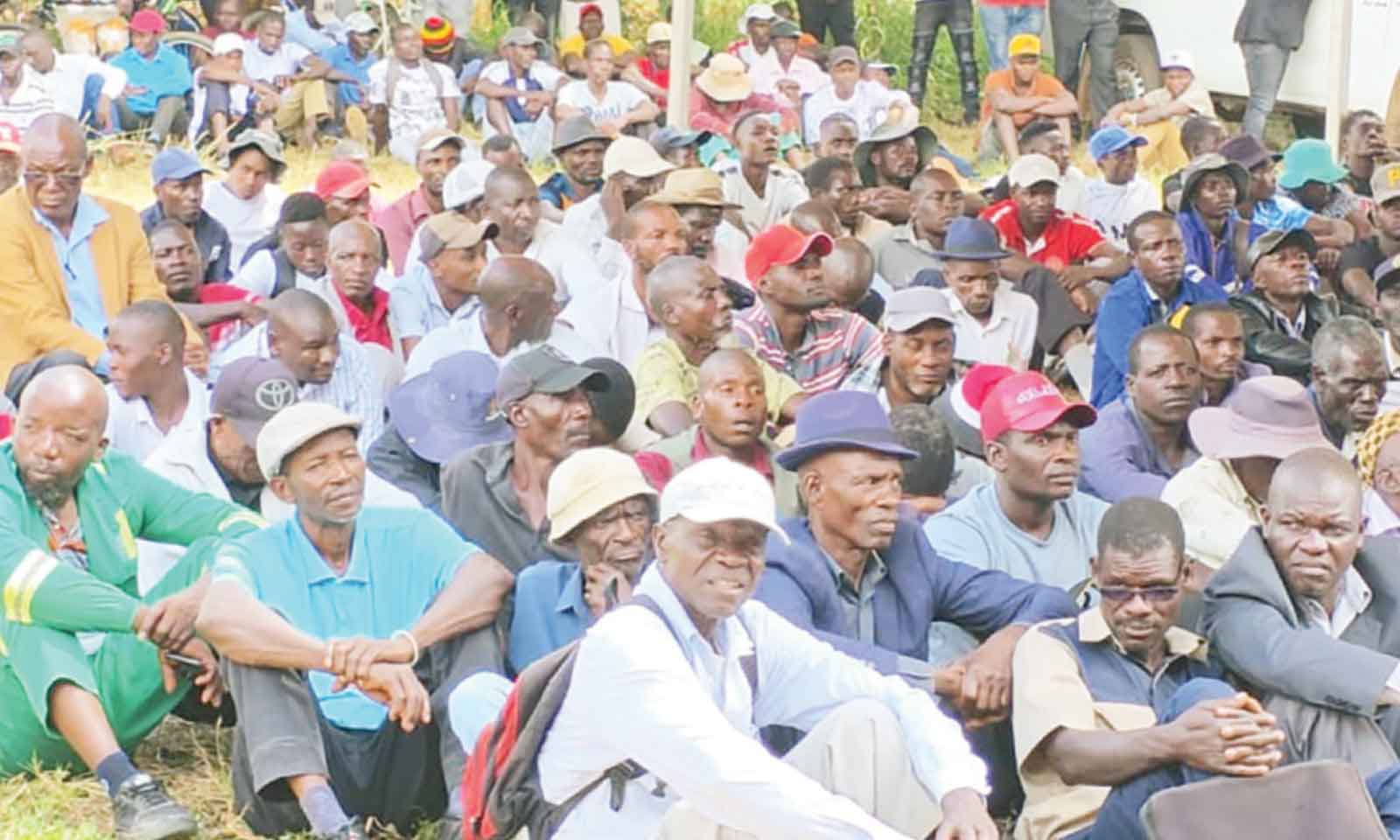
Thousands of Zimbabweans attended the first day of public hearings on Constitutional Amendment Bill No. 3, with many expressing support for proposed changes, including presidential term extensions.
Those that attended across various provinces highlighted a desire for “developmental continuity” and reduced election cycles to facilitate long-term infrastructure projects.
Among many of its far-reaching and transformative proposals, The Bill seeks to align election cycles with the country’s developmental aspirations and economic trajectory.
The 90-day period for public hearings and consultations started on February 17 after the Amendment No.3 Bill was gazetted. During the hearings, the public will have the opportunity to submit written submissions through “special desks” designated for this purpose. Parliament has created a deposit box at the old Parliament Building in Harare Central to enable people to submit their views.
Yesterday, from Harare to Manicaland, from Mashonaland East to Mashonaland West, communities packed venues and waited patiently to express their views, with most of them calling for the swift passage of the Bill to secure developmental continuity and strengthen governance. The scale of participation underscored the high public interest in the proposed amendments.
In some provinces, the hearings were held in multiple districts, drawing chiefs, civil society representatives, businesspeople, farmers, youths, persons with disabilities and religious leaders.
Speakers across the country repeatedly linked support for the Bill to the need for policy continuity, infrastructure delivery and political stability.
Hundreds of Chitungwiza residents attend a public hearing on Constitutional Amendment No. 3 Bill at the Aquatic Complex in the town yesterday
Many contributors argued that longer terms for elected office and clarified roles for traditional leaders would reduce political volatility and create space for long-term projects to be completed.
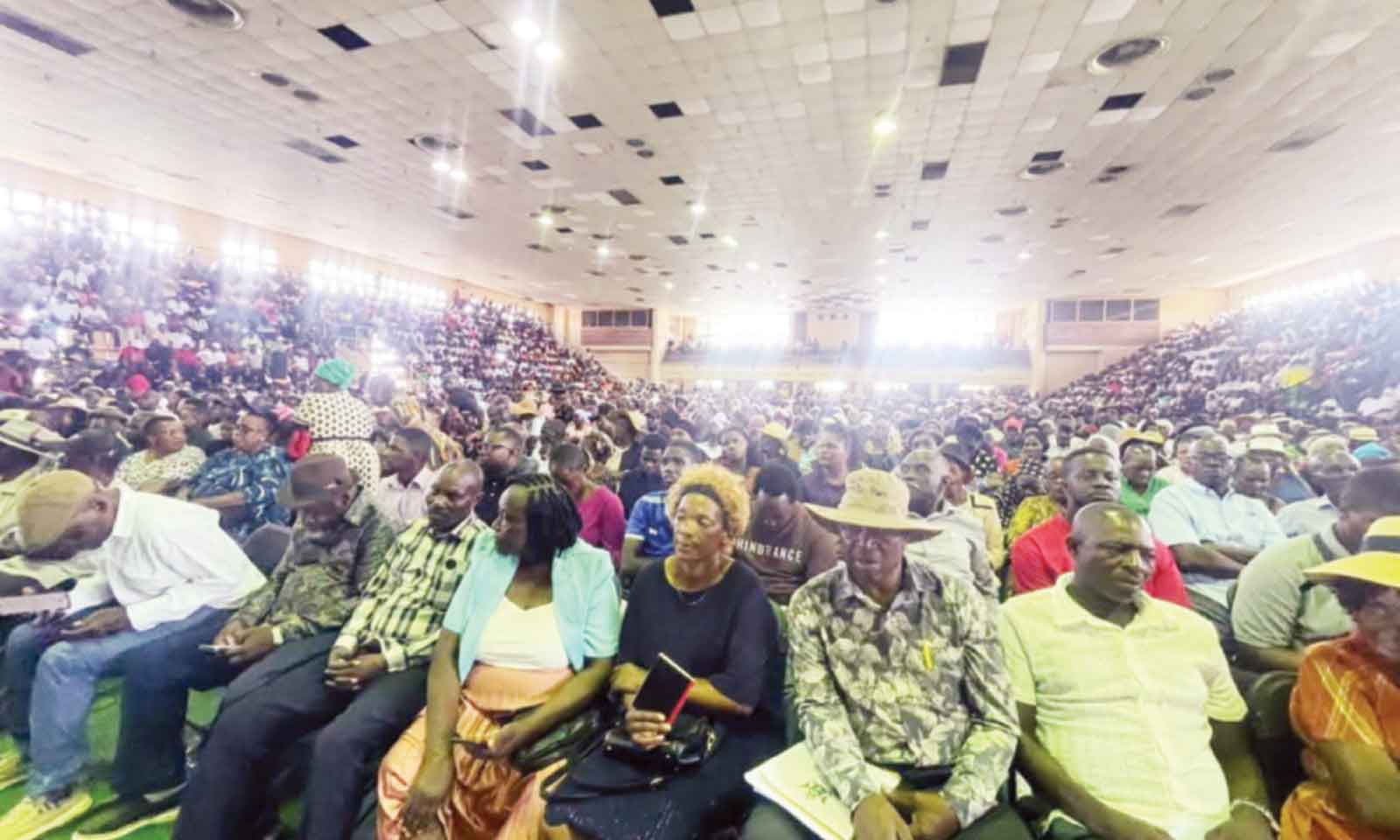
In Harare, more than 5 000 people converged at the Chitungwiza Aquatic Complex to present their views on the Bill.
The Parliamentary team was led by Senator Eleven Kambizi.
Residents began filling the venue from as early as 1pm for the 4pm event. The crowd became so large that some were forced to follow proceedings from outside the complex.
During the two hours, the extension of the presidential term limit emerged as a central theme.
Ms Vivian Banhire was among those who spoke in favour of a two-year extension. “We feel that our President has a lot of projects which need to be completed. In this short period, we have seen him completing projects which have been lying idle for years,” Ms Banhire said.
Mr Anymore Chipfunde from Nyatsime argued that frequent elections can be “toxic” and that the current leadership should be allowed to complete initiated projects.
“We cannot continue being in election mode, which is toxic at times and now we have a peaceful environment. Let us allow the current leadership to complete the projects they initiated, which are there for everyone to see.”
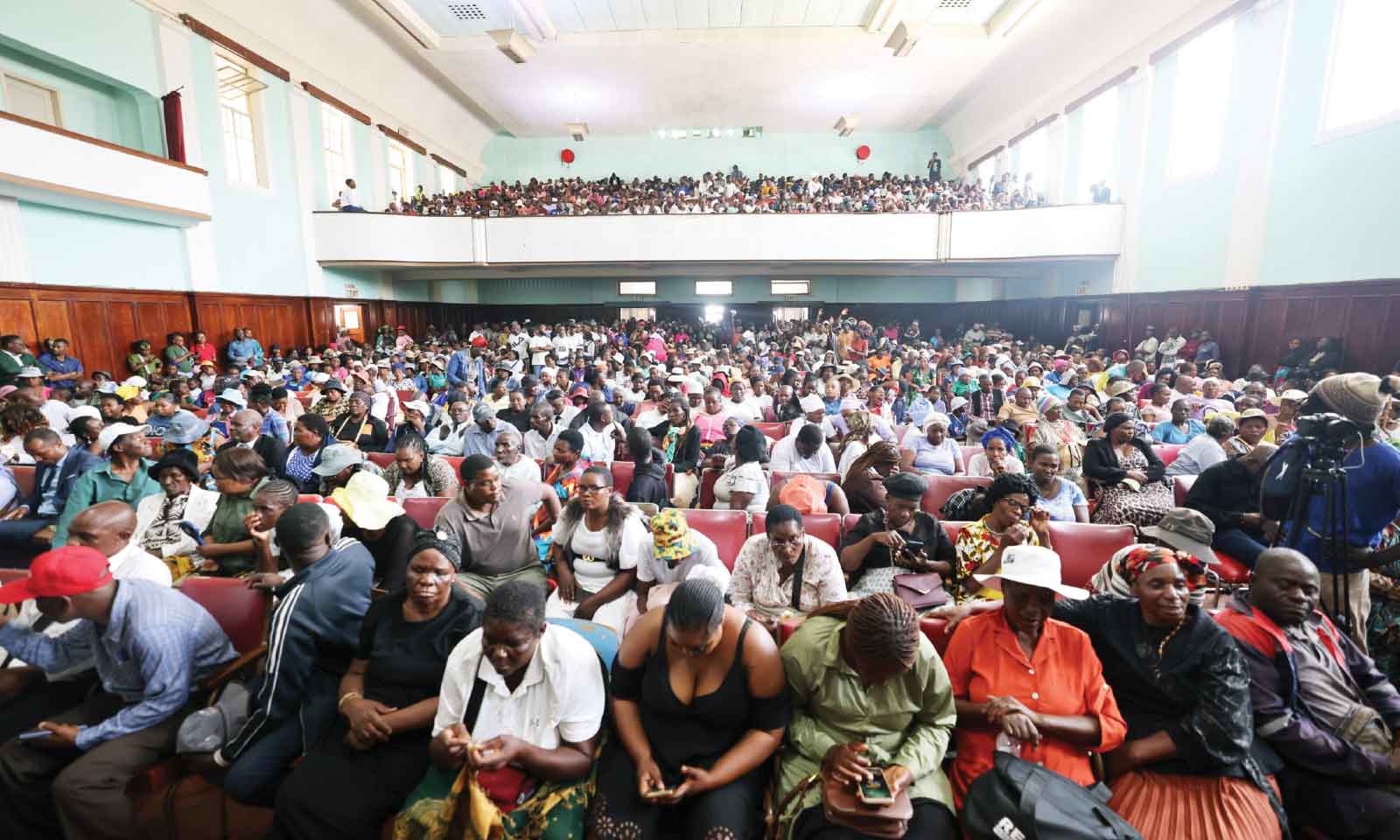
People from all walks of life attend the public hearing at the Large City Hall in Bulawayo yesterday. – Picture: Joshua Muswere
Representing the elderly, Mr Amon Murandu endorsed the Bill, stating it “promotes stability, peace and accountability, crucial for our nation’s growth”.
“As an elderly person, also representing all elderly people, I feel this Bill promotes stability, peace and accountability, crucial for our nation’s growth,” he said.
Senator Kambizi commended the peaceful conduct of the public hearings.
“I am pleased that the first session, which I led at the Dema Council Grounds, started smoothly and on schedule,” Senator Kambizi said. “We commenced at exactly 10am and concluded at 11:45 am, adhering to our two-hour timeframe.
“Everything proceeded according to plan, although in Dema, some participants were eager to speak and began jostling for the microphone to ensure their voices were heard. However, in a nutshell, the entire process went well.”
Minister of State for Harare Metropolitan Provincial Affairs and Devolution, Senator Charles Tawengwa, thanked residents for their high turnout and noted that the venue ended up being small for the crowds. He urged women and youths to continue participating, advising those with reservations about specific clauses to attend further meetings and air their views.
“I urge the youth and every citizen of Harare to attend tomorrow’s meeting (today) in Epworth and at the City Sports Centre,” said Minister Tawengwa.
“It is important for young people to see that the Second Republic is working hard to ensure the country’s stability. When a nation is stable, investments increase, infrastructure improves and jobs are created. That is how we will promote employment and opportunity for all,” said Minister Tawengwa.
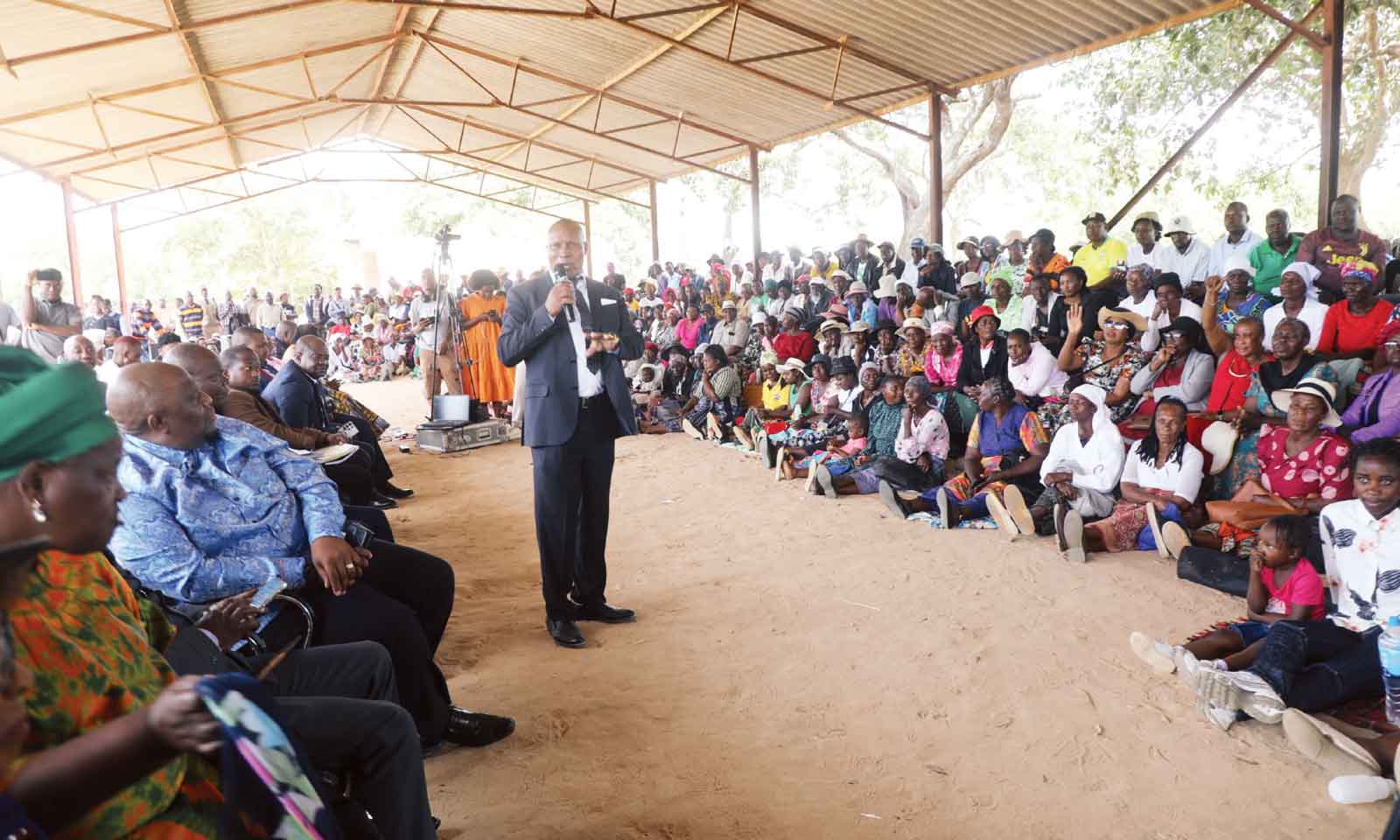
ZANU PF Senator Eleven Kambizi leads the Constitutional Amendment No. 3 Bill Public hearing at Dema Council offices in Seke, Mashonaland East Province, yesterday. – Picture Memory Mangombe
In Masvingo, the people of Chiredzi came out in numbers, saying longer terms will allow for long-term investment, save money from regular elections and promote development across the country.
Today, the people of Masvingo will congregate in Bikita and Gutu districts to also give their views on the Bill.
In Bulawayo, hearings drew large crowds at the Large City Hall and Nketa Hall, with most people speaking in favour of the clauses that they believe will streamline governance and reduce administrative duplication.
“The public hearings will decide the direction that our country will take going forward, so as vendors, we decided that it was worth attending the event even if it meant losing business for at least half a day.
“Our leaders here along Fifth Street encouraged us to attend the public hearings and make our voices heard,” said Mrs Priscilla Mlilo.
At the Nketa Hall, scores of residents started trickling into the venue of the public hearings as early as 8am.
By mid-morning, the venue was filled, forcing some residents to follow proceedings through windows and several doors that are part of the huge structure.
Mrs Simiso Dube said: “We have all seen the good work that President Mnangagwa is doing and I humbly submit that he must be afforded another two years to complete all the projects that he started.”
Part of the crowd that attended the public hearing in Makonde
Mr Godknows Makucheti, 22, of Nketa suburb, said he fully supports Amendment No. 3 Bill.
“Five-year Presidential terms are too short for any Head of State to bring meaningful change that will benefit the youth. We are suffering from drug abuse, limited business opportunities, so I think that the Bill will benefit the youth as the President will have more time to implement policies that will turn around our lives,” said Mr Makucheti
Seke, Chikomba and Hwedza hosted the public hearings in Mashonaland East province, where robust participation was the order of the day.
Chiefs, village heads, ordinary people and religious leaders filled venues and endorsed the Bill.
“We would like our chiefs to have the freedom of having a political party of their choice just like any citizen,” Mr Garikai Kwenda, a Dema resident, said.
In Mashonaland Central, the hearings were held in several districts, many of them urging Parliament to fast-track the Bill.
Farmers, miners and small business operators emphasised the need for stability to attract investment and secure markets.
Submissions from traditional leaders in the province echoed calls elsewhere for recognition of their role in governance and for clarity on political participation.
Bindura lawyer Mr Rainos Gumbo told the gathering that the Bill was anchored on three key pillars, strengthening institutions of governance, removing political polarisation and ensuring the efficient deployment of national resources.
Mr Gumbo emphasised that rationalising governance structures could enhance efficiency, citing the possibility of integrating commissions such as the Gender Commission under the Human Rights Commission to reduce duplication and improve expertise.
“Our communities are in desperate need for peace, development and tranquillity,” he said.
“However, we are trapped in a perpetual election mode that fuels division among citizens along political lines, with little development to show.
“This is not about any individual leader, but about creating strong laws for the country and future generations.”
Chairperson of the Parliamentary Portfolio Committee, Senator Kucaca Phulu, underscored the importance of the public hearings, describing them as a constitutional requirement designed to capture citizens’ views.
“In terms of Section 141 of the Constitution, Parliament must facilitate public involvement in its legislative processes,” he said.
“Additionally, Section 328 requires that the public be invited to express their views on any Constitutional Bill.”
He noted that the Constitutional Amendment Bill No. 3 was gazetted on February 16 and that Parliament has been inviting written submissions from the public since February 25.
Senator Phulu said the outreach programme is being conducted across all districts to ensure inclusivity, given the significance of the Bill.
“This process ensures that every Zimbabwean has an opportunity to contribute to the shaping of the country’s supreme law,” he said.
He also reminded participants that while they enjoy parliamentary privilege to freely express their views during the hearings, they must adhere to rules prohibiting abusive or disrespectful language.
In Mashonaland West province, thousands attended consultations in Makonde, Zvimba, Mhondoro-Ngezi and Chegutu.
At Chipfundi Hall in Makonde, over 3 000 people packed the venue where 40 community members made oral submissions, with only two opposed to the Bill.
Participants welcomed proposals such as extending the presidential term to seven years, merging commissions to reduce duplication, and allowing the President to appoint up to 10 senators on merit.
Chief Zvimba, Mr Stanley Mhondoro, voiced wholehearted support.
“I fully support the Bill, especially clauses that recognise the role of traditional leaders in governance and development,” he said.
Later in the day, the consultations moved to Rafingora Community Hall in Zvimba District, where the Bill received overwhelming support, with no objections raised.
Community members who addressed the committee reiterated that the proposed legislation reflects the aspirations of the people and is key to accelerating development.
Speaking after the two engagements, Parliamentary Committee chair, Senator Kudakwashe Matibiri commended the behaviour exhibited by the people who attended the meetings.
“The meetings went on well and we had no acts of misconduct or violence. People contributed their views freely.
“We gave people time and a chance to speak their mind regarding the Bill. Those that couldn’t speak orally have other ways of sharing their views that we have given them,” he said.
Other members of the committee included Senator Chief Fortune Charumbira and Zvimba East legislator Cde Kudakwashe Mananzva.
The outreach programme continues today, with Parliamentary Portfolio Committees expected to conduct further consultations in Sanyati at Patchway and in Kariba Rural at Makande.
Manicaland province’s hearings were held in Nyanga, Mutasa, Mutare and Makoni, drawing large and peaceful crowds.
Chief Hata of Nyanga urged that traditional leaders be allowed to engage freely in politics.
“Traditional leaders are political animals, always have been involved in politics. The war of liberation was about recovering the land that traditional leaders had been dispossessed by colonialists. “There is no way traditional leaders will preside over cases on partisan political lines. Our subjects already identify with political parties, while we appear not to be, yet we are.
“We have always administered justice, so speaking on behalf of other traditional leaders from Manicaland we are fully behind this Bill,” said Chief Hata.
People with disabilities also voiced support, with Mr John Kamusoma of Nyanga saying the proposed changes would deepen inclusion and entrench rights.
“We want the status quo to remain as it is until 2030, because, as people with disabilities, we have received tangible support from this Government, the Second Republic, when compared to the First Republic.
“We are optimistic that the support will continue to improve under the current setup,” he said.
Parliamentary Committee chair Cde Supa Mandiwanzira described the outreach as successful and ongoing, confirming further hearings in Chipinge, Chimanimani and Buhera.
“We have had significant contributions from members of the public in Nyanga and Mutasa districts. We have had two very successful public meetings where the people were free to give and express their views and opinions as regards clauses the Constitutional Amendment Bill Number 3.
“We are very happy as a Parliamentary Committee conducting these public hearings in Manicaland that the objective is being achieved,” he said.
Midlands province also hosted hearings that attracted a cross-section of communities in Gokwe, including youth and rural stakeholders.
Many speakers supported the amendments that they believe will stabilise governance and provide room for long-term infrastructure projects.
Local business leaders emphasised the connection between political stability, investor confidence and job creation.
In Matabeleland North, thousands of people converged at Tsholotsho Centre where many people backed the Bill, saying longer terms and clearer governance structures would allow for focused development of water, road and health infrastructure.
Today, the hearings continue in Hwange town and in Bubi at Tatazela Hall.
In Matabeleland South, crowds converged at Esigodini and Filabusi Centre where strong support for the Bill was recorded.
Contributors noted that consistent policy and longer planning horizons would help revitalise agricultural productivity and local enterprise.
Today, more hearings are scheduled in many parts of the country, with the process ending on Thursday.