Source: Indigenous churches throw weight behind CAB3 – herald
Zimpapers Reporter
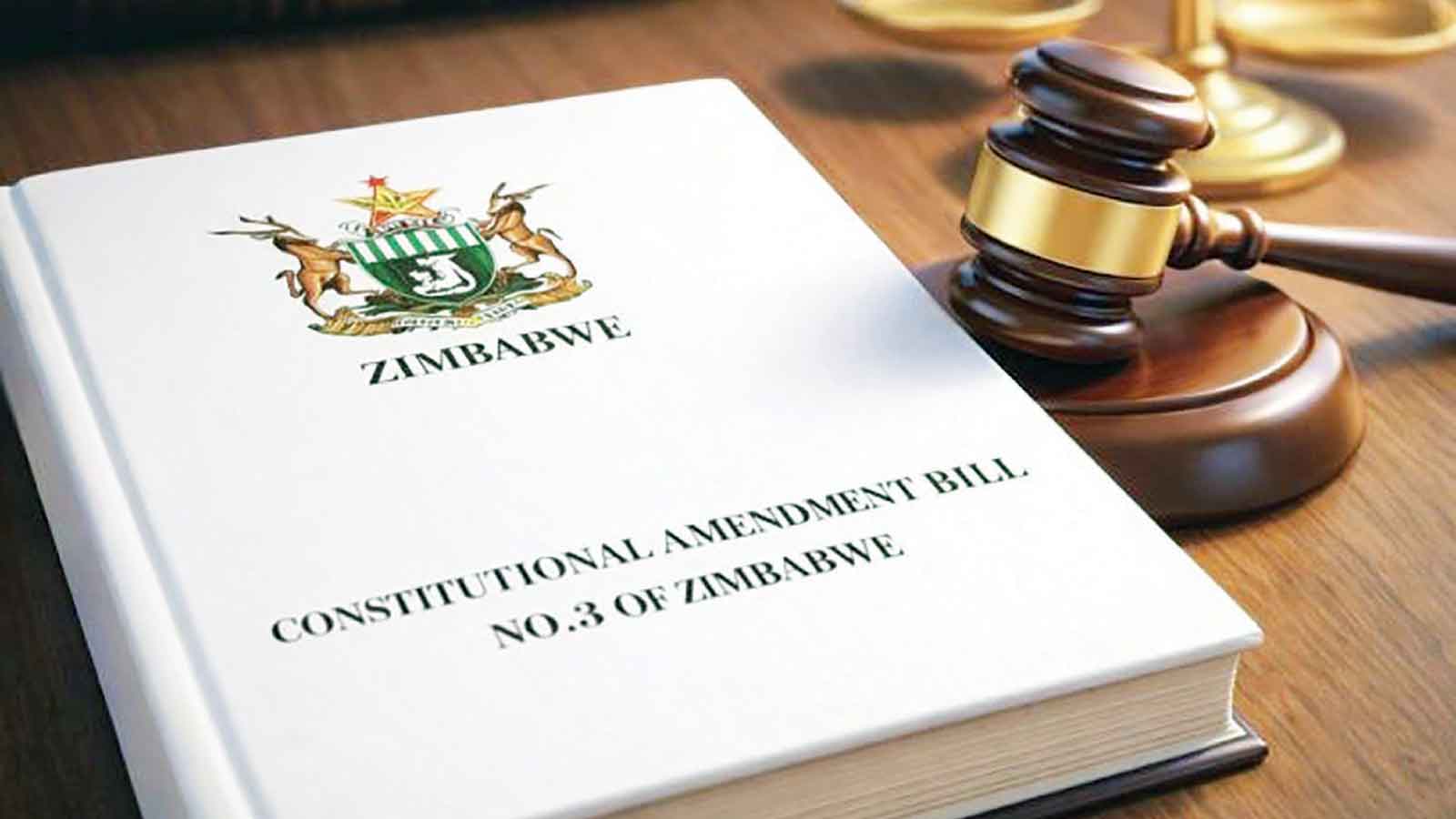
THE Zimbabwe Indigenous Interdenominational Council of Churches (ZIICC) has thrown its weight behind the Constitution of Zimbabwe (Amendment No. 3) Bill, 2026, describing the proposed changes as lawful, necessary and critical for national development and stability.
In a detailed submission presented to the Clerk of Parliament yesterday, the church body — representing Apostolic, Pentecostal, Evangelical and other denominations with a combined membership of more than 8,7 million Zimbabweans — urged Parliament to pass the Bill in the national interest.
“We submit this statement in support of the Constitution of Zimbabwe (Amendment No. 3) H.B.1 Bill, 2026, and we do so with conviction, with clarity and with the full authority of our calling,” said the churches in their submission.
They argued that elected legislators had a constitutional mandate from the people to amend the supreme law.
“The people of Zimbabwe discharged their democratic mandate. Parliament now carries that mandate forward in the name of and for the people,” they stated.
The churches said public consultations conducted by Parliament across the country fulfilled constitutional requirements on public participation.
“We affirm that the public participation requirement of Section 141 of the Constitution has been fulfilled. Parliament conducted public hearings across all administrative districts of Zimbabwe,” they said.
The church organisation also defended provisions changing presidential and parliamentary terms from five to seven years, saying the changes would allow the Government to fully implement long-term development programmes under Vision 2030 and the national development strategies.
“The extension of the Presidential election cycle from five to seven years are the necessary constitutional response to this developmental reality,” the churches stated.
They further linked the seven-year governance cycle to biblical teachings on restoration and renewal.
“We see seven years not as an arbitrary number. It is the governance space required to plan, absorb disruption, recover and complete programmes of the scale and ambition that Vision 2030 and NDS2 (National Development Strategy 2) represent,” they said.
On the proposed electoral reforms, ZIICC backed the move to have the President elected by Parliament instead of through direct popular vote, saying the reform would reduce political tensions.
“In our considered view, the removal of the direct Presidential election is not a democratic regression,” the churches said.
“It is a recognition that the high-stakes, winner-takes-all Presidential contest has been an unnecessary recurring source of political tension and social division in Zimbabwe’s post-independence life.”
The churches endorsed reforms affecting traditional leaders, saying chiefs and other traditional authorities should enjoy full political freedoms as Zimbabwean citizens.
“Clause 21 of the Bill resolves this tension by restoring to our traditional leaders the full dignity of Zimbabwean citizenship while preserving the sacred dignity of their traditional office,” the churches said.
ZIICC further supported the repeal of constitutional provisions establishing the National Peace and Reconciliation Commission, arguing that the commission’s constitutional mandate expired in August 2023.
“This is not an abandonment of reconciliation. It is a recognition that reconciliation is too important, too sacred and too deeply rooted in the life of this nation to be confined to a single Government commission.”
The church body urged legislators to pass the Bill without fear.
“We have prayed over this Bill. We have listened to our congregations. And we are satisfied that what Parliament is being asked to do serves the best interests of the nation, honours its Constitution and answers the prayers of the millions of Zimbabweans.”