
Source: The Herald – Breaking news.
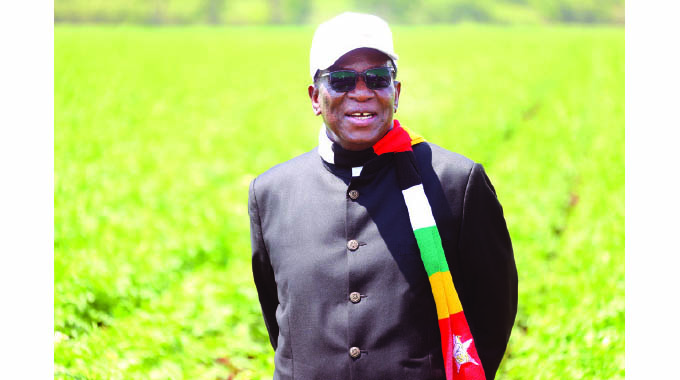
President Mnangagwa Precious Manomano-Herald Reporter
Presidential schemes in the agricultural sector have seen an impressive 85 percent of the total crop produced this year coming from small-scale farmers.
Among these, 60 percent are beneficiaries of the Land Reform Programme.
Thanks to interventions introduced by President Mnangagwa, Zimbabwe’s agricultural sector has thrived, focusing on increasing both production and productivity.
Farming is now viewed as a full time profession, providing many families with decent income.
The Crop, Livestock, and Fisheries Assessment (CLAFA-1) for the 2024-25 season shows significant growth in maize, sorghum, sweet potatoes, and tobacco cultivation, highlighting the effectiveness of the Land Reform Programme and the accompanying Government interventions.
Professor Obert Jiri, the Permanent Secretary for Lands, Agriculture, Fisheries, Water and Rural Development said the various schemes have had a transformative impact on local farmers, resulting in increased crop production, especially in wheat and maize, which marks a major shift in the agricultural landscape.
Prof Jiri said the bumper harvests achieved illustrate the effectiveness of Government policies in enhancing agricultural output.
“Since the land reform, we have managed to achieve a bumper harvest of all crops this season. The Government has introduced various policies to support farmers and boost productivity levels. These include the Presidential Input Scheme, Pfumvudza, and Command Agriculture,” he said.
Additional schemes include the Presidential Cotton Scheme, Presidential Tick Grease Scheme, Presidential Rural Horticulture Scheme, Presidential Community Fisheries Scheme, Presidential Rural Poultry Scheme, Presidential Rural Goat Pass-on Scheme, Presidential Solar Scheme, Presidential Borehole Scheme, and Presidential Rural Development Scheme.
More than 11 million people have benefited from the various initiatives designed to enhance household and national food security.
Through these tailored schemes, beneficiaries are earning a decent living and creating a foundation for an upper middle-income economy by 2030.
Prof Jiri noted that success is not just about the amount of land cultivated but about maximising productivity per unit area.
“It’s about producing more from fewer resources, which is the hallmark of agricultural transformation in Zimbabwe.”
He stressed the importance of engaging with the private sector, saying these partnerships can drive substantial growth in agriculture, encouraging farmers to collaborate with landholders who may lack resources, and advocating for strategic partnerships through joint ventures.
Apart from providing inputs, Government has successfully implemented 460 smallholder irrigation schemes, benefiting 35 585 households across 26 173 hectares of land to enhance farmers’ incomes while ensuring efficient water resource management.
Currently, 19 264ha representing 74 percent of the equipped area are functional, with 15 859 hectares fully operational and 3 405 hectares partially operational.
Statistics from the Ministry of Lands, Agriculture, Fisheries, Water and Rural Development revealed that Manicaland has 9 257 registered beneficiaries of 67 irrigation schemes with a capacity to irrigate 5 683ha.
In Mashonaland West, 2 287 benefited from 50 schemes covering 1 553ha.
Matabeleland North has 1 250 beneficiaries from 33 schemes that can irrigate 1 161ha, while Mashonaland East supports 1 594 beneficiaries through 56 schemes with a capacity of 2 933ha. The Midlands region has 3 719 registered beneficiaries from 56 schemes that irrigate 1 821ha. Masvingo boasts 8 172 beneficiaries supported by 73 schemes with a capacity of 4 168ha, and Mashonaland Central contributes 2 594 beneficiaries through 49 schemes that can irrigate 5 218ha.
Matabeleland South has 6 712 beneficiaries for 74 schemes with a capacity to irrigate 2 945ha.
The Vision 2030 accelerator model, launched by President Mnangagwa in 2021, focuses on imparting agribusiness skills to rural, urban, and peri-urban households to ensure that their farming enterprises are self-sustaining and run profitably.
This model supports rural industrialisation as part of the Second Republic’s drive to scale up agricultural transformation, transforming irrigation schemes into viable business units, and managing 35 000 Village Business Units (VBUs), 9 600 School Business Units (SBUs), and 68 Vocational Training Centre Business Units (VTCBUs).
The Village Business Unit concept aims to establish 35 000 companies across villages, each equipped with a solar-powered borehole and linked to aggregation and value-addition centres.
Beneficiaries from the schemes have expressed profound gratitude for the opportunities it has created.
These sentiments were echoed at the tobacco auction floor, where beneficiaries expressed satisfaction with the prices of their tobacco sales. Various interventions that have been made in the agriculture sector have not only improved farmers’ economic prospects, but also restored their dignity, allowing them to thrive as independent farmers in a liberated nation.
Zimbabwe’s economy is anchored on agriculture, with the sector contributing 18 percent to gross domestic product.

« Bitumen alternative game-changer for road construction
Gutu bids farewell to ex-CIO boss »