
Rich in wildlife and nature experiences, bursting with African pride and welcoming of all people, Zimbabwe offers a slice of an authentic African experience.
Source: Quick Guide to Zimbabwe: Visa-free travel for South Africans | Traveller24

**Travel Update June 28, 2019**: What travellers need to know about Zim’s new Forex rules:
Zimbabwe’s Finance Minister Mthuli Ncube has taken the decision that foreign currencies are no longer acceptable as legal tender in the Southern African country.
Fin24 reports Ncube states the Zimbabwe dollar is now the only acceptable medium of exchange for local transactions.
However, the decision should not concern tourists to Zimbabwe. The Zimbabwe Tourism Authority (ZTA) has issued a statement saying the necessary measures are in place to ensure that travellers are not inconvenienced in any way by the ban on forex.
A Tourism Update report states travellers should be mindful of false social media reports and that “police are not authorised to stop and search people for foreign currency”.
These are the payments methods still applicable in Zimbabwe, according to the Zimbabwe Tourism Authority:
- Credit cards are readily acceptable everywhere in Zimbabwe, where the relevant arrangements have been made with international credit card companies such as VISA, MasterCard and others issued by different banks in the countries of origin of the travellers.
- Service providers do have international credit card-enabled point-of-sale (POS) machines.Visitors may also withdraw local cash from international credit card-enabled Automated Teller Machines (ATMs) of the different banks.
- These will be clearly marked as international and will have the logos of the accepted credit card companies.
- Foreign cash may be exchanged at the bank, bureau-de-change or at any other authorised foreign currency dealers at the prevailing bank rates.
- Visitors are however encouraged to use plastic money and only exchange amounts of money in cash that they anticipate using.
- However, visitors may convert their money back to their foreign currency subject to prevailing terms and conditions.
- Online payments and telegraphic transfers remain acceptable forms of payment in Zimbabwe.Visa fees, where applicable, are payable in foreign currency and may be paid in cash at any port of entry.
- The Government of Zimbabwe has an e-visa system and intending travellers may apply and pay for their visas online.
- Tipping is not a commercial transaction and hence visitors are at liberty to tip as they wish. It becomes incumbent upon the recipient to ensure adherence to the foreign exchange regulations.
Planning a trip to Zimbabwe:
Zimbabwe, our neighbour which recently gained a new hope in the form of political change – proves to be a country with so much to offer its own people, as well as South Africans.
Rich in wildlife and nature experiences, bursting with African pride and welcoming of all people, Zimbabwe offers more than just a safari getaway – it offers a slice of an authentic African experience.
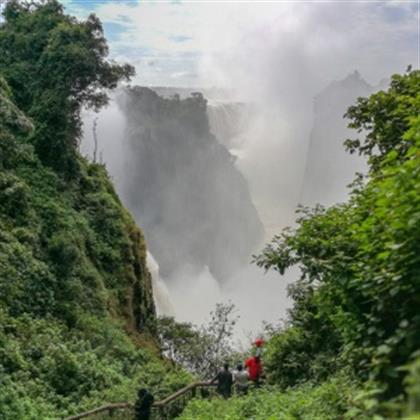
From shopping at local markets and sleeping in the wild, to exploring a Natural Wonder of the World and being fully immersed in local cultural activities, there’s so much to do in this small region of Zimbabwe.
To help you delve into the natural and cultural beauty of Zimbabwe, here’s what you need to know when planning your trip.
Visa requirements: No. Zimbabwe is visa-free for South Africans with a valid passport for a stay up to 90 days.
Medical requirements: It’s highly advised to take anti-malaria tablets and carry mosquito repellents. Vaccines for typhoid, hepatitis A, hepatitis B, cholera, yellow fever, rabies, and influenza are recommended.
National Carrier: Air Zimbabwe.
Airport Hub: Harare International Airport.
Flight Route: Fly direct from Johannesburg or Cape Town, with a number of airlines, to Victoria Falls or Harare.
Currency: Zim$25 = R1
Travel adapter: Type D and G.
Time Zone: Same time zone as SA (GMT+2)
Public Transport: South Africans usually drive across the borders, but if you fly instead, then you can rent a car, travel via bus or catch a ride with the National Railways of Zimbabwe. There are two types of buses – express services that run according to a set timetable and local buses that have no schedule and generally wait until it’s full to leave. There are also metered taxi companies that provide transport in major cities. Transport can also be arranged with the hotel where you are staying, or a tour company such as Wild Horizons, to drop and pick you up from your desired destinations.
Climate: Varies by altitude. There is a dry season, including a short cool season during May to October when the whole country has very little rain. The rainy season is typically a time of heavy rainfall from November to March.
Best time to visit: The dry May to October winter season is generally the best time to visit Zimbabwe for game-viewing in mild temperatures and to experience little to no rainfall and a lower malaria risk.
However travel operator Wild Horizons says that “From August onwards, the months of summer provide the perfect opportunity to experience white-water rafting, river boarding and canoe trips up the Zambezi River. Bird life during this time is at its most spectacular, with a huge variety of migrant birds returning south to spend the summer months in and around the Zambezi River. Photography will also be excellent during this time of the year as much of the surrounding wilderness will be in.”
Languages: Zimbabwe has 16 official languages – Chewa, Chibarwe, English, Kalanga, Koisan, Nambya, Ndau, Ndebele, Shangani, Shona, sign language, Sotho, Tonga, Tswana, Venda, and Xhosa.
Useful Phrases: English is widely spoken and most people living in major cities are multi-lingual. However, it’s vital to get schooled on some of the main phrases and words in Shona – one of the major languages spoken in Zimbabwe – to ease communication when you’re travelling the country. Here are some key words:
- Hello – Mhoro (one person), Mhoroi (many people)
- How are you? – Wakadini zvako? (one person), Makadini zvenyu? (many people
- Goodbye – Sara Zvakanaka (one person), Sariayi Zvakanaka (many people
- Excuse me – Pamusoro (one person), Pamusoroyi (many people)
- How much is this? – Chinoita marii?
- Sorry – Ndineurombo
- Thank you – Waita zvako (one person), Maita zvenyu (many people)
- I don’t understand – Handisi kunyaso nzwisisa
Food to try: Mopani worms and a variety of game meat, including wartog and kudu, as well as crocodile are must try delicacies of Zimbabwe. Tradition foods that you must taste are: Sadza – stiff maize meal served with meat, sauce, gravy, sour milk, or stewed vegetables; Bota – porridge flavoured with peanut butter, milk, butter or jam; Dovi – peanut butter stew with meat or vegetables; Nhedzi – wild mushroom soup; and Mapopo candy – Papaya cooked in and dusted with sugar. Also try Whawha, a traditional maize beer.
Travel tips
What to pack:
- Your passport, arrival and return tickets, adequate money.
- A camera, notebook/ tablet or smartphone, power-bank to stay charged on the go.
- Comfortable, lightweight, and casual clothes.
- Comfortable sandals, sneakers and strong shoes if you decide to go on hikes.
- A hat, sunscreen, sunglasses.
- An umbrella/ rain coat during the rainy season.
- A warm jacket for evening game drives.
- Hand sanitiser, tissues, wet wipes, insect repellent – sprays and lotions, prescription medication.
- Binoculars for safaris/sightseeing, waterproof bag to store personal belongings when on boat cruises/ water activities.
Tips while exploring:
- Learn the common phrases in the local language and about local culture, and respect cultural norms.
- Take anti-malaria tablets while visiting Zimbabwe which is in a high malaria zone. Be sure to inquire from a travel clinic in your home country well in advance before your trip.
- Organise airport transfers before you depart.
- Don’t take photos at border crossings or of government buildings. Have a positive attitude with authorities.
- Drink bottled water.
- Take note of your safety briefing at game drives and tours.
- Always listen to your guide.
- If you feel unwell while you travel, tell your guide or accommodation hosts.
Western animal rights groups steal Sadc votes »