
Source: RBZ suspends 10pc ZiG plan for small gold miners – herald
Tapiwanashe Mangwiro
Senior Business Reporter
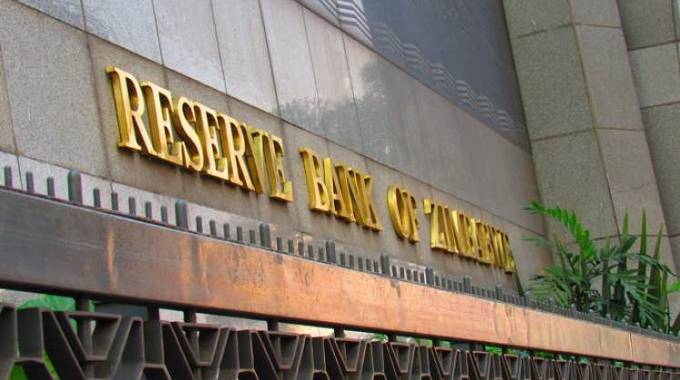
THE Reserve Bank of Zimbabwe has suspended the implementation of a 90 percent export retention threshold for small-scale gold miners, after operational constraints threatened to disrupt a key source of foreign currency inflows.
Previously, small-scale miners were paid 100 percent of their proceeds in foreign currency (US dollars).
Large-scale gold miners in Zimbabwe are required to surrender 30 percent of their export proceeds to the RBZ at the prevailing exchange rate.
The decision, announced earlier this week following the latest Monetary Policy Committee (MPC) meeting, comes as small-scale miners continue to play a dominant role in gold deliveries, which are underpinning a sharp rise in export earnings, currency stability and economic growth.
RBZ Governor Dr John Mushayavanhu said the MPC welcomed the introduction of the export retention threshold of 90 percent for small-scale gold miners.
“The policy, however, encountered some implementation challenges by Fidelity Gold Refinery.
In this regard, the committee resolved to temporarily suspend implementation of the policy while appropriate logistics are being put in place, for the smooth operationalisation of the proposed retention requirements,” the governor said.
The central bank decided to settle 10 percent of the proceeds due to small-scale miners in local currency amid suspected growing diversion of gold from large-scale producers to small producers to avoid higher royalties and access better incentives.
Small-scale miners in Zimbabwe currently benefit from a lower preferential royalty rate of 1 percent to 2 percent on gold, aimed at encouraging formal deliveries and protecting them from higher tax burdens.
But Zimbabwe uses a tiered royalty regime for large-scale producers. The producers are charged 3 percent for gold prices below US$1 200/oz, 5 percent for prices US$1 201 – US$5 000/oz and 10 percent for gold prices above US$5 000/oz.
The MPC said that while the 90 percent retention policy was designed to incentivise production and formalisation, implementation challenges at the operational level, including limited banking access among miners, necessitated a temporary suspension.
Mining engineer Nyasha Mutamba said the move reflects the structural realities of Zimbabwe’s gold sector, where small-scale producers dominate output but remain partially informal.
“Small-scale miners are now the backbone of Zimbabwe’s gold output, and by extension, a critical source of foreign currency,” said Mrs Mutamba.
“However, policy must align with on-the-ground conditions. A significant number of these miners are not fully integrated into the banking system, so abrupt changes in retention frameworks risk disrupting deliveries.”
According to the MPC, the Zimbabwe Mining Federation had flagged that many artisanal miners require time to open bank accounts and adapt to compliance requirements, raising concerns that immediate enforcement could slow gold inflows to formal channels such as Fidelity Gold Refinery.
Small-scale miners (SSMs) in Zimbabwe are pivotal to the economy, accounting for 75 percent of the record 46,7 tonnes the country achieved last year, largely due to formalisation, targeted Government support and increased mining capacity.
In 2025, Zimbabwe earned US$4,48 billion from gold shipments, the country’s largest export.
Economist Farai Mukandi said the central bank’s intervention was necessary to safeguard short-term forex stability while longer-term reforms are implemented.
“The authorities are balancing two objectives, maximising foreign currency retention and sustaining gold deliveries,” Mr Mukandi said.
“If policy implementation undermines incentives for small-scale miners to sell through formal channels, the country risks losing both output and foreign exchange.”
Zimbabwe’s macroeconomic position has strengthened in recent months, supported by single-digit inflation and a stable exchange rate. Annual inflation fell to 3,85 percent in February 2026, with projections indicating it will remain below 5 percent despite temporary pressures from rising global oil prices.
The central bank maintained its policy rate at 35 percent, signalling a commitment to price stability amid external risks, including fuel price shocks linked to geopolitical tensions in the Middle East.
Mrs Mutamba said policy consistency in the mining sector will be critical to sustaining current gains.
“Beyond retention thresholds, issues such as power supply, access to equipment, and predictable pricing frameworks will determine whether small-scale miners can maintain or increase output,” she said.
“Stability in these areas directly translates into stronger export performance.”
Foreign currency inflows rose to US$3,35 billion in the first two months of 2026, up from US$1,89 billion in the comparable period last year, largely driven by gold and platinum group metals exports.
Dr Mushayavanhu said, “Reflecting strong export performance mainly driven by mining exports, particularly gold and PGMs, total foreign currency inflows increased to US$3,35 billion during the first two months to February 2026 from US$1,89 billion for the comparable period in 2025.
“The strong foreign currency inflows have helped rebuild foreign exchange reserves and support the stability in the foreign exchange market, while providing adequate backing for the local currency, ZiG.”
The surge in gold-driven inflows has helped rebuild foreign exchange reserves and support the Zimbabwe Gold (ZiG) currency, which authorities say is gaining traction following the rollout of new banknotes expected in April.
Mr Mukandi noted that while the contribution of small-scale miners is positive, formalisation remains essential for long-term fiscal and monetary stability.
“There is clear momentum in gold exports, but the next phase must focus on bringing more of these miners into the formal economy,” he said.
“That improves traceability, tax collection, and financial intermediation, all of which strengthen the broader economy.”
The MPC said it will continue to monitor both domestic and global developments, with particular attention to maintaining low inflation and stable exchange rates, while ensuring that key export sectors, especially gold, remain supported.
With small-scale miners now central to Zimbabwe’s export performance, policy calibration in the sector is expected to remain a critical lever in sustaining foreign currency inflows and overall economic stability.

No to malcontents: President »