
Source: RBZ to engage MNOs over mobile money discrepancies – herald
Business Reporter
The Reserve Bank of Zimbabwe (RBZ) says it will engage mobile network firms to ensure parity in trading between local and foreign currencies under the multicurrency system and eliminate discrepancies.
The move is aimed at creating a more level playing field, which allows users to choose freely between transacting in either domestic or foreign currencies with ease and efficiency.
This comes after stakeholders pointed out several significant challenges associated with transacting in the Zimbabwe Gold (ZiG) when using mobile money to purchase essential services, which is not the case when using US dollars.
In some instances, prices in local currency are significantly higher than in US dollars and often disregard the official exchange rate.
Zimbabwe introduced a new gold-backed domestic currency, ZiG, in April last year to replace the Zimbabwe dollar, whose value had been severely eroded by inflation.
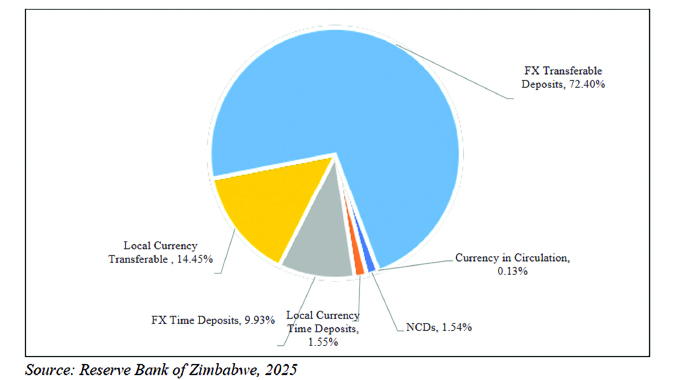
The local unit has gained significant traction, accounting for more than 40 percent of transactions on the national payment system.
ZiG has remained largely stable since its introduction, with monthly inflation plummeting and forecast to remain below 3 percent for the year, while the annualised rate should close the year within the 30 percent cap.
The majority of Zimbabweans heavily rely on mobile money services for a wide range of essential transactions, including buying goods and services, settling bills, paying school fees and accessing other vital services.
Despite this economic reality in the multicurrency system, the usability and acceptance of ZiG remain limited and encumbered in some spaces compared to the US dollar.
RBZ said it was critical to address these challenges and ensure that legal tender in Zimbabwe is easily usable for transactions to promote a more efficient and inclusive financial system.
“The Reserve Bank will engage mobile money operators to ensure that there is equal trading in both domestic and foreign currencies in line with the multicurrency system,” the bank said in its 2025 Mid-Term Monetary Policy Statement Stakeholder feedback report.
Addressing the issues, the central bank said, can increase the acceptance of the local currency across the economy and ensure inclusivity of the financial system, ultimately benefiting users and supporting economic stability.
The bank also noted that stakeholders expressed concerns around high fees, a situation that is increasing the cost of conducting transactions through the formal banking system.
The high bank charges also increase the financial burden on users, making it more expensive for them to manage their finances and conduct transactions.
According to stakeholders, the central bank should consider revising its fee structures to make them more competitive and user-friendly.
The RBZ stressed its commitment to address the issue through moral suasion, by continuously encouraging banks and other financial institutions to adopt more favourable pricing policies through the Bankers Association of Zimbabwe (BAZ).
“Through moral suasion, the Reserve Bank continues to urge the BAZ pricing policies,” said RBZ.
The RBZ aims to influence the behaviour of financial institutions, promoting more reasonable and customer-centric practices that can help reduce costs and improve access to financial services.
This approach is in tandem with RBZ’s role of shaping the financial sector’s conduct and fostering a more conducive environment for economic growth.
Earlier this year, RBZ governor Dr John Mushayavanhu urged banks to move away from fee-income-based models.
In his 2025 Monetary Policy Statement, he had laid bare that fees accounted for 22 percent of banks’ income, while lending, which should be the core role of banks, accounted for 13,46 percent of banks’ income.
High charges levied by Zimbabwean banks on both local currency and foreign currency accounts (FCAs) are frustrating depositors, who have since accused the financial institutions of ripping them off.
They are discouraging those with foreign currency from banking.
Economist Tinevimbo Shava said banks are no longer doing their core business of lending money, hence the exorbitant charges owing to economic challenges.
“Banks are no longer involved in their core business, which is to lend money. In the circumstances, they have resorted to high bank charges to compensate for low lending levels,” he said.
Another economist, Dr Langton Mabhanga, described the current bank charges as excessively high and burdensome.
“The charges are too high, especially given that the interest rates are negative,” he said.
“Regrettably, the banks are taking advantage of the inelastic demand for their services by the customer.
“However, this approach is ultimately detrimental to the banks themselves, because it erodes the value of their services and damages their relationship capital. In the long run, this strategy will compromise their competitiveness.”
Zimbabwe’s multicurrency system was introduced in February 2009, when the government switched to a basket of currencies, led by the US dollar, following the discontinuation of the Zimbabwean dollar.

« President to meet Qatari Royalty
Overcoming Crisis: Turning Challenges into Opportunities »