
Source: New era in Zim-Ghana ties – herald
Fungi Kwaramba in ACCRA, Ghana
THE signing of 10 Memoranda of Understanding between Zimbabwe and Ghana heralds the beginning of a new era in the two countries’ relations, anchored on economic cooperation and partnerships, reflecting their shared determination to improve the lives and livelihoods of their people, President Mnangagwa has said.
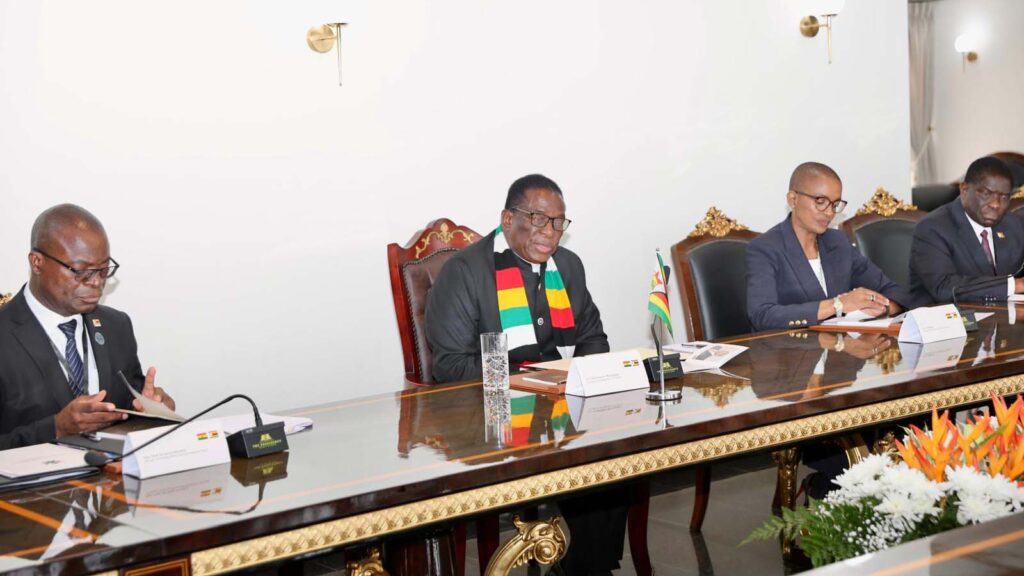
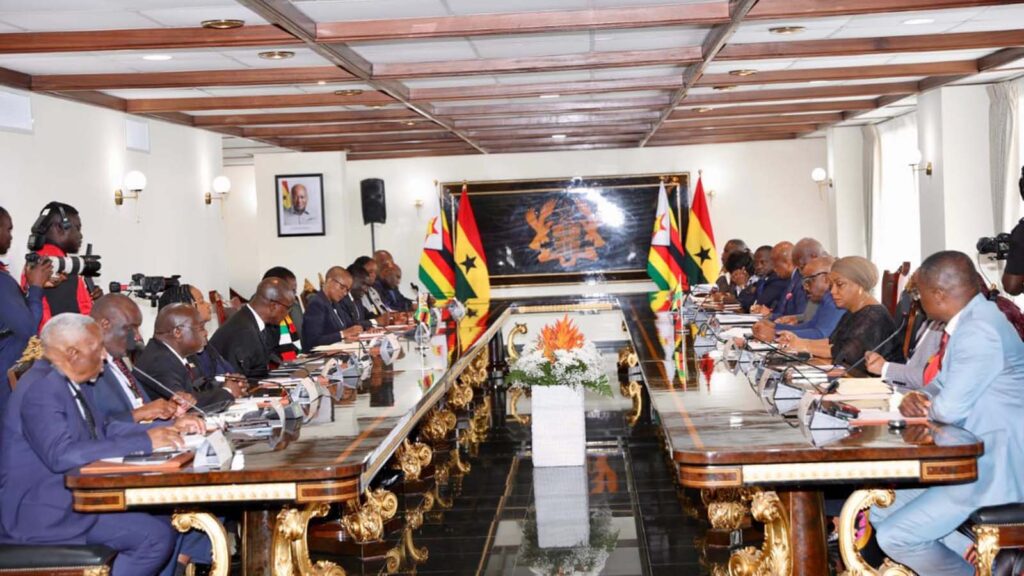
Yesterday, the President and his Ghanaian counterpart, President John Mahama, presided over the signing of the 10 MoUs, which followed the inaugural session of the Zimbabwe–Ghana Joint Permanent Commission on Cooperation (JPCC), marking the culmination of the first meeting of the Commission.
While Zimbabwe and Ghana have solid political relations, founded and strengthened during the struggle for independence, President Mnangagwa has expanded the ties to cover a range of critical areas, with clear scope for collaboration and partnership.
These include tourism, agriculture, education, science and technology.
Some of the 10 MoUs signed yesterday were on Political and Diplomatic Consultations and an MoU between the Zimbabwe Foreign Service Institute and the Foreign Service Institute of Ghana on Cooperation in the Field of Research, Training and Documentation.
Other MoUs include cooperation in health, energy, tourism, archives, sports, construction of the Museum of African Liberation, cooperation between ZimTrade and the Ghana Export Promotion Authority and a MoU between Geo-Pomona Waste Management Private Limited and Jaspong Group of Companies (Ghana).
While Zimbabwe and Ghana have solid political relations, founded and strengthened during the struggle for independence, President Mnangagwa has expanded the ties to cover a range of critical areas, with clear scope for collaboration and partnership.
In his opening remarks, President Mnangagwa said the State visit heralds the beginning of a new era in Zimbabwe–Ghana relations, anchored on economic cooperation, strategic partnership and the shared determination to improve the lives and livelihoods of the two countries’ peoples.
The President is paying the first State visit to Ghana by a Zimbabwean leader.
Ghana provided training to some of the first liberation struggle recruits in the 1960s and is home to the late Dr Kwame Nkrumah, a revered figure in Pan-Africanism and the independence of Africa.
“President Mahama and I held productive and forward-looking discussions on how Zimbabwe and Ghana can deepen cooperation in trade, investment, agriculture, mining, energy, tourism, health, sports and education, among other strategic sectors.
“We welcomed the successful convening of the Inaugural Session of the Zimbabwe–Ghana Joint Permanent Commission on Cooperation, which has established a structured framework to guide the progressive development of our bilateral relations,” said President Mnangagwa.
The two countries also signed several cooperation agreements and MoUs, with more expected to be signed to strengthen institutional collaboration and unlock new opportunities for both economies.
“Both countries are determined to leverage the opportunities presented by the African Continental Free Trade Area to expand intra-African trade. Zimbabwe and Ghana possess complementary economic strengths, and we are committed to promoting stronger commercial exchanges and building resilient African value chains,” said the President.
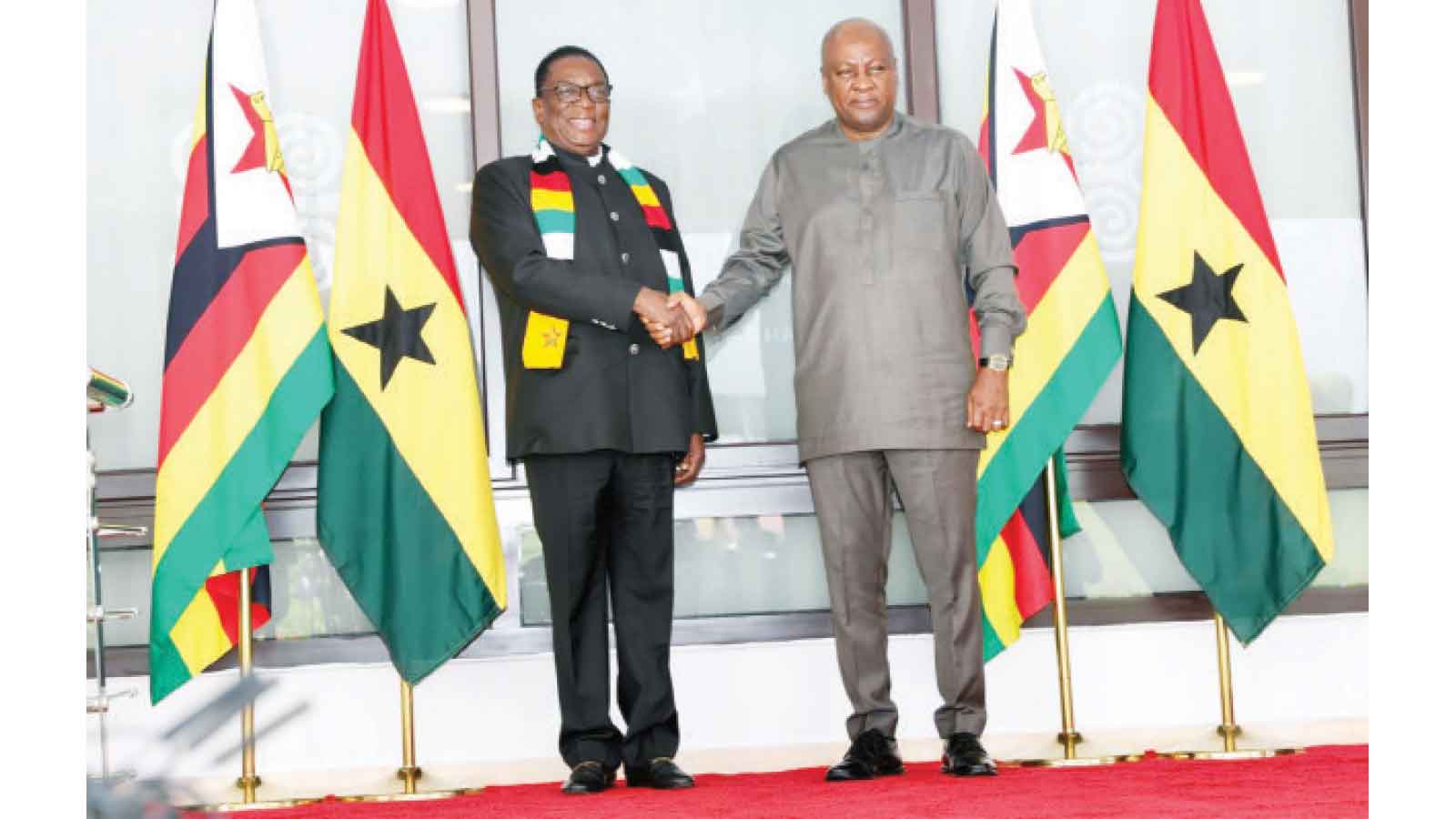
President Mnangagwa and his Ghanaian counterpart, President John Mahama, presided over the signing of the 10 MoUs, which followed the inaugural session of the Zimbabwe–Ghana Joint Permanent Commission on Cooperation (JPCC), marking the culmination of the first meeting of the Commission.
Zimbabwe and Ghana are also related through familial ties as Zimbabwe’s founding father, the late President Robert Mugabe, was married to Sally Mugabe, a Ghanaian national.
This has since fostered strong people-to-people relations.
“The existing visa-free travel arrangement between Zimbabwe and Ghana continues to facilitate mobility, tourism, cultural exchanges and educational cooperation, thereby reinforcing the bonds between our peoples.
“Our partnership will also extend to knowledge exchange and capacity development, including collaboration between our diplomatic training institutions, universities and innovation hubs, in line with Africa’s aspiration to build knowledge-driven economies,” said President Mnangagwa.
In their discussions, the two African leaders exchanged views on key continental and global issues.
“We reaffirmed the importance of stronger African unity and cooperation in advancing the objectives of Agenda 2063 and ensuring that Africa speaks with one voice on matters affecting the continent,” President Mnangagwa said.
He said as Zimbabwe marches towards achieving Vision 2030, it remains hamstrung by the debilitating economic sanctions. “Zimbabwe appreciates Ghana’s continued solidarity, including its principled support for the removal of illegal and unjustified unilateral sanctions imposed on Zimbabwe.
“The deeper purpose of our cooperation is to ensure that the people of Africa are never again subjected to indignity, marginalisation or economic humiliation.
“Through stronger intra-African cooperation and partnerships among our nations, we have a duty to unlock the vast potential of our continent and build a future defined by development, dignity and prosperity,” said the President.
President Mnangagwa said the country looks forward to collaborating with Ghana in the various fields where MoUs were signed.
President Mnangagwa and his Ghanaian counterpart, President John Mahama
“Last year, the Forbes Magazine named Zimbabwe the top global destination to visit in 2025. I am aware that Ghana has been consistently nominated for top global tourism awards.
“It is in this context that we look forward to the Twinning Arrangement between the City of Victoria Falls and the City of Cape Coast of Ghana.
“Zimbabwe welcomes collaboration with Ghana in the heritage sector, given our shared Pan-African aspiration to preserve both the tangible and intangible heritage of our two nations.
“In March 2023, I dispatched my Special Envoy to deliver a message and invite Ghana to participate at the Museum of African Liberation Project in Harare. We are on track to complete this ambitious project by 2027. The one acre of space offered to Ghana, at the museum site, will serve to tell the story of Ghana’s historic contribution to the African liberation agenda and Pan-Africanism,” he said.
President Mnangagwa added that it was important for African countries to tell their stories through such platforms.
“The importance of telling our own stories as Africans, through our own lenses and narratives, must continue to be emphasised,” he said.
The President also took time to campaign for Zimbabwe’s bid for a non-permanent seat at the United Nations Security Council for 2027.
“Guided by our foreign policy thrust that ‘Zimbabwe is a friend to all and an enemy to none’, our country is bidding for a non-permanent seat on the United Nations Security Council, for the 2027 to 2028 term.
“We thank Ghana for your continued support as we prepare to contribute to global peace and security.
Allow me, my dear brother, to also express Zimbabwe’s deep gratitude to Ghana for your steadfast support in calling for the unconditional removal of the unjust, illegal unilateral sanctions imposed on us by some Western nations for more than two and a half decades.
“Despite the albatross of these illegal and inhuman sanctions, Zimbabwe remains resilient, scoring unprecedented development and economic milestones across all sectors,” said the President.
On his part, President Mahama said his country stands ready to work with Zimbabwe both on the regional and global stages to advance the interests of Africans.
“Africa stands at a defining moment in its journey. Across our continent, there is a renewed determination to shape our own destiny, to tell our own story, and to build resilient and prosperous societies.
“In this context, partnerships such as that between Ghana and Zimbabwe take on even greater significance. They remind us that while geography may separate us, history — and indeed destiny — bind us together. As we strengthen our bilateral relations, we remain equally mindful of our collective responsibilities within Africa and the wider global community,” he said.
COMMENTS