
A report by the Institute for Security Studies and the University of Johannesburg, which refutes several widespread anti-immigrant claims, says the real causes of social ills in South Africa are poor governance and corruption, not immigration.
Source: Immigrants contribute 9% of GDP but blamed for SA’s failures – ISS report | News24
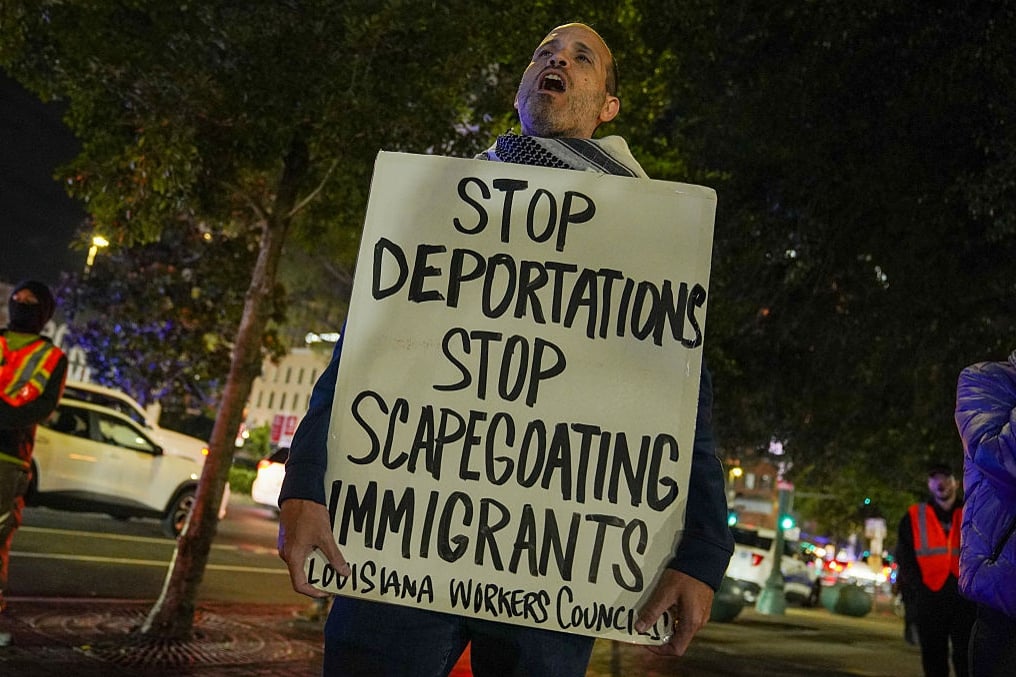
- A report has countered the most common anti-immigrant myths, finding that foreigners make up only 6.5% of South Africa’s population but contribute 9% to the GDP.
- Thanks to politicians’ rhetoric, half of South Africans believed that there were up to 40 million immigrants, even though the actual number was 3.95 million.
- The report highlighted increasing anti-immigrant sentiment, saying that 42% of South Africans want no immigrants at all – up from 30% in 2021.
Immigrants make up only 6.5% of South Africa’s population, but contribute 9% to the GDP.
This is according to a report by the Institute for Security Studies and the University of Johannesburg, which has refuted several widespread anti-immigrant claims.
The report pointed to the real cause of social ills in South Africa as poor governance and corruption, not immigration. It also highlighted that South Africa loses an estimated R27 billion annually to corruption, more than one-third of the 2021/22 national health budget.
The report further found that politicians and anti-immigrant groups have wildly exaggerated immigrant numbers, with almost half of South African believing their claims. In fact, there are only 3.95 million immigrants, or 6.5% of the population, in line with international norms and only 10% of what South Africans widely believe.
Yet, since 1994, there have been more than 930 xenophobic attacks recorded, resulting in more than 630 deaths, the displacement of 123 700 people, and the looting of 4 850 shops.
The report highlighted that immigrants make up 5.3% of the labour market, and that each immigrant worker generates approximately two jobs for locals. Immigrants contribute roughly 9% of GDP and have a positive net fiscal impact, the report stated.
Senior researcher at the University of Johannesburg’s Centre for Social Development in Africa, Anthony Kaziboni, said that the research was conducted against a backdrop of rising anti-immigrant sentiment in the country.
“It has become even more relevant now, because the issues immigrants are being blamed for, particularly by politicians and senior government officials, are high crime; failing public services, such as healthcare; taking jobs from locals while making no positive contribution; and being in the country illegally, among others,” he said.
“Scapegoating as a phenomenon is by no means unique to South Africa. It follows the same pattern in the United States under President [Donald] Trump, whose second-term rhetoric and enforcement have routinely blamed Latin American immigrants, Mexican, Venezuelan and others, for crime and social strain, deflecting attention from domestic governance failures in much the same way.”
Lizette Lancaster, head of the ISS Crime Hub, said anti-immigrant rhetoric and sentiment have been growing over the last few years, and that their research found that 42% of South Africans now want no immigrants in the country, up from 30% in 2021.
Lancaster said:
“There’s been growth in people who identify predominantly along ethnic lines rather than national lines, and we are seeing that more people blame immigrants for all problems and believe that immigrants are taking jobs. This shows that the conversation, especially campaigns on social media, has had an impact, and that’s why we are seeing more traction for these anti-immigrant groups,” she said.
Lancaster added that the ISS predicted a rise in vigilantism as a direct result of the public’s diminishing trust in state institutions.
According to Kaziboni, the most striking finding was “the gap between what people believe nationally and what they report experiencing in their own communities”.
“In 2021, almost half of South Africans believed the country contained between 17 million and 40 million immigrants. The best available estimate at the time was approximately 3.95 million. That is not a minor statistical error; it shows how sustained repetition by politicians, officials and parts of the media can manufacture an imagined demographic crisis,” he said.
The report found that 66% of South Africans believed immigrants increased crime, yet research showed that only around 6% of households said crime was caused by people from outside South Africa. Undocumented foreigners averaged just 2% of total inmates, and made up 7% to 8% of convicted cases.
Lancaster said that there was a misconception that foreigners were driving organised crime.
“In order for organised crime to thrive, it cannot rely on only foreign-born migrants. Any group would require South Africans in order for it to function. We have to understand that crime is homegrown. It is not exclusive to or predominantly migrants,” she said.
Lancaster added that research had shown that “migrants were actually very beneficial to the economy”.
“We’re not saying there are no problems, but the problem is population, not the migrants. And of course, the research doesn’t say we shouldn’t have stricter border control. It was looking at the reality inside the country using credible available data,” she said.
South Africa has been grappling with poverty, inequality, and unemployment for more than a decade. The report argues that rather than acknowledging their own failures, politicians and public officials use their positions of power to redirect citizens’ anger away from themselves. They do this by scapegoating foreign nationals as the source of socio-economic challenges.
Kaziboni said: “The report is explicit that public officials and politicians have used migration to direct citizens’ anger toward immigrants and away from state failure relating to poor governance, corruption and non-responsiveness to community needs. It is far easier to point to an immigrant-run spaza shop, waiter, or delivery rider than to explain why the economy has failed to generate sufficient employment over several decades, alongside the global macroeconomic factors also at play.”
COMMENTS