
Source: Khami Prison reaps big in maiden tobacco harvest – herald
Raymond Jaravaza, ray.jaravaza@chronicle.co.zw
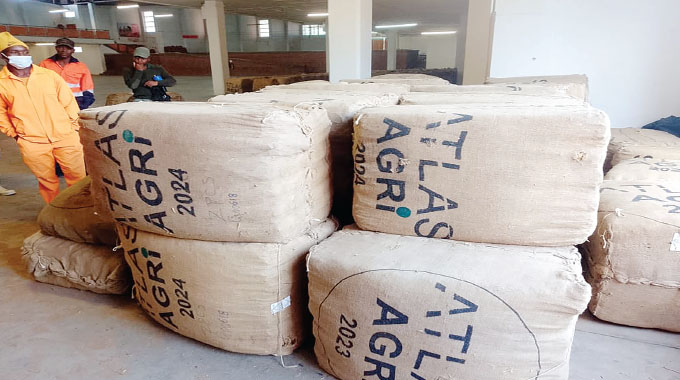
KHAMI Prison has harvested an impressive six tonnes of tobacco from its pioneering tobacco production project, marking a major milestone for the correctional institution and underlining the success of the Second Republic’s drive to transform agriculture into a key pillar of economic growth, food security and rural industrialisation.
The project positions Khami Prison among emerging tobacco producers in the Matabeleland region and highlights how Government-backed agricultural initiatives are creating opportunities even within correctional facilities through rehabilitation and skills development programmes.
Zimbabwe Prisons and Correctional Service (ZPCS) Officer Commanding Bulawayo Metropolitan Province, Commissioner Mkhulunyelwa Ngwenya, said the institution’s first tobacco crop exceeded expectations and has encouraged authorities to significantly expand production next season.
“The Khami Prison tobacco project has to date produced 79 bales with an average weight of 76,97kg per bale, giving us a total yield of 6 081kg on tobacco that was planted on three and a half hectares. The average yield was 1 737kg per hectare,” he said.
“The remaining tobacco in the fields is expected to produce around 15 to 20 bales.
“Although prices were lower than expected, we plan to increase the number of hectares to 10 for the 2026/27 season.”
The initiative dovetails with the Government’s broader agricultural transformation agenda, which aligns with Vision 2030 that seeks to modernise farming, boost productivity, create employment and diversify income streams across all provinces.
Through programmes under the Agriculture and Food Systems Transformation Strategy and various Presidential agricultural support schemes, Government has been encouraging institutions, communal farmers and commercial producers to embrace high-value crops as part of efforts to grow the economy and increase export earnings.
Comm Ngwenya said the tobacco project is not only generating income for the prison but is also equipping inmates with practical farming skills that will help them reintegrate into society upon release.“The inmates who participate in the project are trainee farmers and they will benefit from their labour. We also ensure that they work in a safe environment by providing personal protective clothing such as face masks, gloves and overalls,” he said.
The success of the project reflects the growing footprint of tobacco farming in Matabeleland, a region traditionally associated with livestock production and small-grain farming.
In recent years, the Government has intensified efforts to expand tobacco production beyond Mashonaland provinces, providing training, inputs and technical support to farmers in Matabeleland South and Matabeleland North.
The shift became more visible in 2023 when communal farmers in Mangwe District embraced tobacco production, with dozens of households turning to the crop as a viable commercial enterprise capable of generating higher incomes compared to traditional crops.
Today, more than 390 growers are producing tobacco in Mangwe and Bulilima districts, while other farmers in Umguza and Nyamandlovu have also joined the sector.
The expansion aligns with President Mnangagwa’s policy of leaving no one and no place behind in the country’s economic development agenda.
Agricultural experts say tobacco has become one of Zimbabwe’s most important export crops, earning the country hundreds of millions of United States dollars annually and providing livelihoods for thousands of families.
The Khami Prison project is also in line with the Government’s correctional services reform programme, which seeks to transform prisons into centres of rehabilitation, skills development and production rather than mere detention facilities.
Meanwhile, the Tobacco Industry and Marketing Board (TIMB) has urged farmers across the country to destroy all tobacco stalks immediately after harvesting to prevent the spread of pests and diseases that could threaten next season’s crop.
TIMB said failure to comply with this requirement is an offence and may attract fines or imprisonment.
“Across tobacco-growing communities, there is one activity that may look simple but carries enormous importance for the future of every farmer’s crop, tobacco stalk destruction. After reaping, many tobacco fields remain with standing stalks, the remains of the tobacco plant after all leaves have been reaped,” said TIMB
“To some, these stalks may seem harmless. However, hidden within those standing stalks is a danger that many farmers only fully understand when the next crop begins to suffer.”
TIMB said leftover stalks provide breeding grounds for pests, diseases, viruses and nematodes, allowing them to survive between growing seasons.
“They allow these destructive organisms to survive from one season to another, waiting quietly for the next tobacco crop to emerge. Failure to comply with this requirement is an offence and may attract fines or imprisonment,” said TIMB
By destroying tobacco stalks, farmers break the life cycle of pests and diseases and prevent them from carrying over into the next season.
“Without a host plant to feed on, many pests simply die. For the farmer, this means starting the next season with cleaner and healthier fields. Unfortunately, when stalks are left standing in fields, the consequences often return months later in painful way,” said TIMB.
“Farmers begin to notice pests that are difficult to control and diseases spread faster.”
COMMENTS