
Source: Reforms unlock investment, economic growth – herald
Oliver Kazunga
Senior Reporter
GOVERNMENT has rolled out sweeping investment reforms, including sharp cuts in licensing fees and a new framework for infrastructure partnerships, as Zimbabwe intensifies efforts to attract capital and accelerate economic growth.
The reforms, unveiled by the Zimbabwe Investment and Development Agency (ZIDA) in its 2026 First Quarter Report, come amid growing investor confidence, with total projected investment value increasing by 62 percent to US$1,9 billion.
Domestic direct investment also surged from US$4,08 million to US$102,38 million, signalling increased participation by local investors and joint venture partners in major projects.
Despite a decline in the number of new investment licences from 214 to 146 during the quarter under review, investment activity shifted towards fewer, but more capital-intensive projects.
Capital equipment imports accounted for 46 percent of total investment during the period, followed by foreign currency cash injections at 25 percent and foreign loans at 22 percent.
The figures reflect sustained investor confidence and growing utilisation of leveraged financing models.
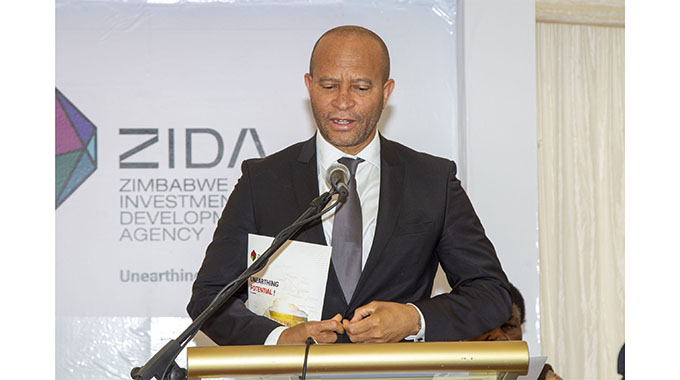
ZIDA chief executive officer Mr Tafadzwa Chinamo said the reforms reflected Government’s determination to strengthen the investment environment despite global economic and geopolitical challenges.
“ZIDA has made significant and measurable progress in strengthening the investment environment,” he said.
“This progress has been driven by key policy developments, enhanced investor engagement and improvements in investment facilitation.”
“The period also reflects a shift towards higher-value investments and more structured investment activity, while highlighting the need to strengthen conversion and execution going forward,” he said.
A major highlight during the quarter was Cabinet approval of the Public-Private Partnership (PPP) Guidelines, which establishes a standardised framework for the preparation, appraisal and implementation of PPP projects.
The guideline is expected to unlock infrastructure development by improving transparency, strengthening coordination across Government institutions and providing investors with clearer processes and risk-sharing mechanisms.
The Government has also reduced investment licensing fees under Statutory Instruments 17 and 18 of 2026, covering General Investments and Special Economic Zones (SEZs), to lower barriers to entry for both local and foreign investors.
Under the new fee structure, the General Investment Licence fee was reduced to US$4 000 from US$5 000, while the SEZ Designate Certificate was slashed by half to US$25 000.
The Developer Permit fee was cut sharply from US$10 000 to US$1 000, while the SEZ Operator Licence was reduced from US$20 000 to US$10 000.
Investor Licence fees were also lowered from US$10 000 to US$4 000.
Mr Chinamo said the fee reductions were aimed at enhancing Zimbabwe’s competitiveness and reaffirming the country’s commitment to being a cost-competitive investment destination.
“The downward review of licensing fees is a deliberate intervention to reduce the cost of entry and enhance Zimbabwe’s competitiveness, signalling that Zimbabwe is open for business,” he said.
In the quarter under review, Zimbabwe secured US$1,4 billion in investment commitments with ZIDA identifying and engaging 162 potential investors.
Investor interest was strongest in the energy and infrastructure sectors, reflecting continued focus on key economic enablers.
Energy and infrastructure dominated investment leads, with renewable energy recording eight leads, while infrastructure followed with seven.
Agriculture and information and communication technology (ICT) each accounted for six leads, manufacturing three and tourism one.
The investment reforms come at a time when countries across the globe are competing aggressively for foreign direct investment amid economic uncertainty and geopolitical tensions.
Meanwhile, Government is also modernising investment facilitation systems through collaboration with the United Nations Conference on Trade and Development (UNCTAD) on the Investment Single Window prototype.
The initiative is expected to streamline investor services and improve efficiency, transparency and coordination across Government institutions.
Zimbabwe has also launched the Business and Knowledge Process Outsourcing Framework to position the country as a regional outsourcing hub, leveraging its youthful, English-speaking and highly literate workforce.
Authorities believe Zimbabwe’s strategic location between European and Asian time zones, coupled with targeted fiscal incentives, will strengthen the country’s competitiveness in global outsourcing value chains.
Newer Post
Zim, E. Guinea set to sign first JPCC Older Post
Hre-Beijing ties accelerate trade
COMMENTS