
Source: SADC ministers meet to speed up integration – herald
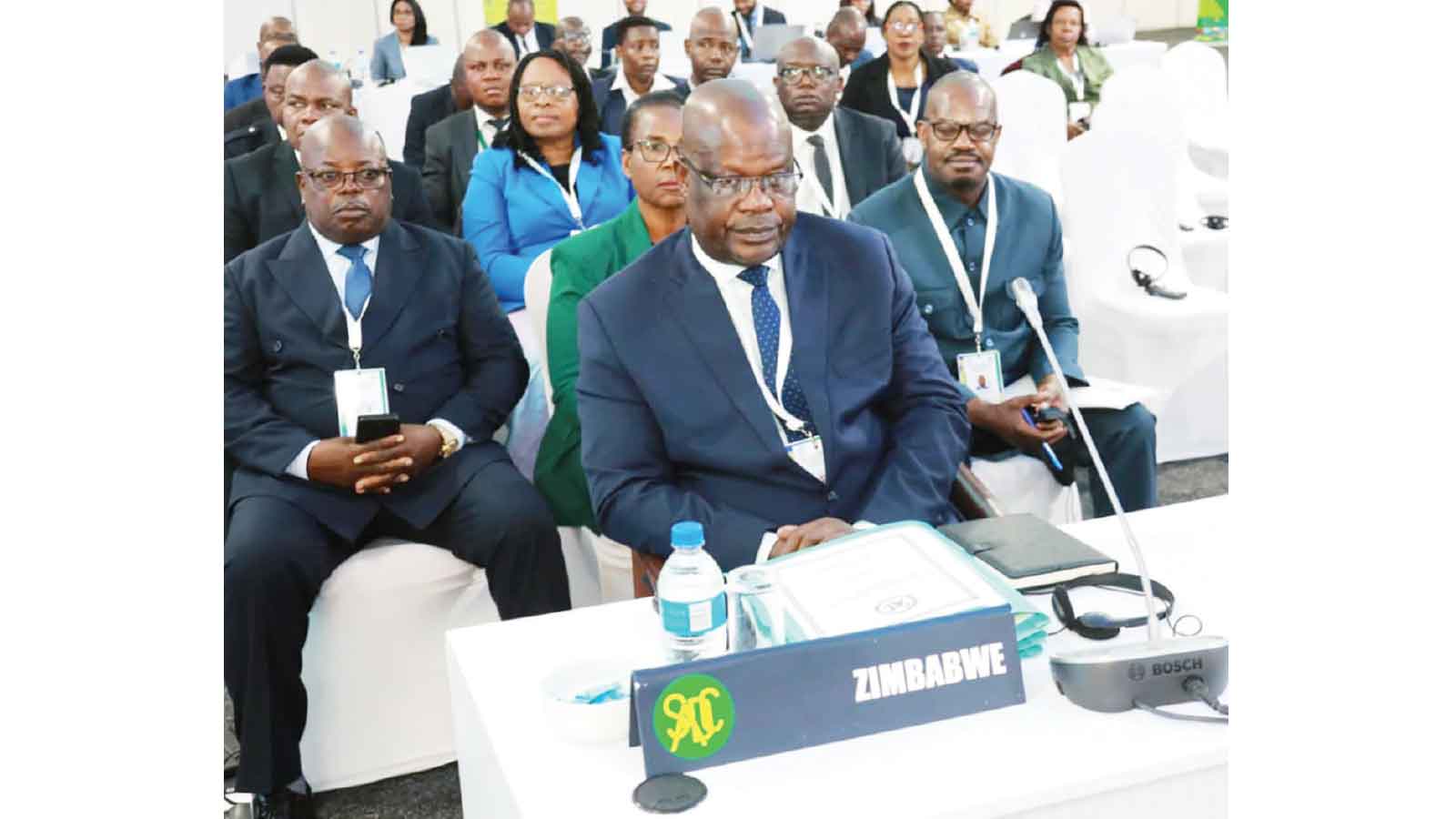 Environment, Climate and Wildlife Permanent Secretary, Mr Simon Masanga (front) leads a delegation comprising (from left) Acting Permanent Secretary for Transport and Infrastructural Development Dr Exavier Chisoko, ICT, Postal and Courier Services Permanent Secretary, Dr Beaullar Chirume; and Information, Publicity and Broadcasting Services Permanent Secretary Nick Mangwana at the SADC cluster meeting of Ministers Responsible for Transport, ICT, Information, and Meteorology in Bulawayo yesterday. – Picture: Eliah Saushoma
Sikhumbuzo Moyo
Bulawayo Bureau
THE 6th SADC cluster meeting of Ministers Responsible for Transport, ICT, Information and Meteorology, which opened in Bulawayo yesterday, is expected to accelerate the regional integration agenda by advancing infrastructure development, connectivity, trade facilitation and policy harmonisation across Southern Africa.
The high-level meeting, being hosted in Bulawayo, has brought together member states, SADC Secretariat officials, policymakers, technical experts and stakeholders to chart practical pathways towards a more integrated, connected and prosperous region.
As Southern Africa pursues deeper economic integration, the outcomes of the Bulawayo meeting are expected to strengthen regional connectivity, facilitate trade, improve infrastructure coordination and enhance resilience to climate and economic shocks, bringing the region closer to its vision of a seamless and integrated SADC community.
Central to the deliberations is the need to transform regional commitments into tangible outcomes that improve the lives of citizens through modern transport systems, enhanced digital connectivity, climate resilience and increased economic opportunities.
Speaking at the opening of the meeting, South Africa’s director-general in the Department of Communications and Digital Technologies and Chairperson of the Committee of Senior Officials, Ms Nonkqubela Thathakahle Jordan-Dyani, said the sectors under discussion are the backbone of regional integration and sustainable development.
“These sectors remain critical enablers of economic growth, trade, connectivity, as well as sustainable development across our region. Our citizens look to SADC not only for commitments and declarations, but for tangible improvements in their daily lives,” she said.
“They expect integrated and modern transport networks, greater and affordable digital connectivity, improved access to information, stronger climate resilience and opportunities that support economic growth, entrepreneurship and job creation.”
The meeting comes at a time when SADC is intensifying efforts to realise the objectives of the bloc’s Vision 2050, and the Regional Indicative Strategic Development Plan (RISDP) 2020-2030, both of which place regional integration at the centre of economic transformation and industrialisation.
Ms Jordan-Dyani said senior officials have a responsibility to ensure that regional cooperation mechanisms deliver measurable results and bridge the gap between policy formulation and implementation.
Over the next three days, delegates will review progress in expanding regional connectivity, strengthening policy and regulatory frameworks, advancing innovation, improving transport infrastructure and enhancing meteorological cooperation.
The meeting is also assessing the implementation of previous ministerial decisions, with delegates seeking ways to accelerate regional infrastructure projects that are key to unlocking intra-regional trade, investment and economic growth.
Welcoming delegates to Zimbabwe, Bulawayo Provincial Affairs and Devolution Permanent Secretary Mr Paul Nyoni said regional integration remains one of the most effective vehicles for achieving sustainable economic growth, industrialisation and shared prosperity in Southern Africa.
“These sectors facilitate trade and investment, connect people and markets, enhance access to information and services, and strengthen the region’s capacity to respond to emerging challenges, including those associated with climate change, technological transformation and innovation.”
Mr Nyoni said the development of efficient transport networks, modern digital infrastructure, reliable information systems and effective meteorological services was central to achieving SADC’s development aspirations.
COMMENTS