
There is a quiet revolution happening across Zimbabwe. It is not being fought in the streets of Harare, nor debated in the halls of Parliament. It is being built on the foundations of rural growth points, small towns, and district service centres — one solar panel, one borehole, and one Starlink dish at a time.
For decades, Zimbabwean aspiration was a one-way ticket to the city. The bright lights of Harare and Bulawayo promised jobs, opportunity, and a better life. But that promise has been broken. Urban councils are collapsing under debt, ageing infrastructure, and failed service delivery. Households in Harare receive municipal water twice a week — and even that water is often contaminated. Roads are potholed. Refuse collection is erratic. Electricity is unreliable. The city that was meant to be the engine of the economy has become a burden on its residents. And then the Mayor of Harare said it out loud. The Quote That Changed the Conversation In September 2026, Harare Mayor Jacob Mafume told a radio audience something that many had been thinking but no one in public office had dared to say: The capital city is not a refugee camp. It’s a place of business.
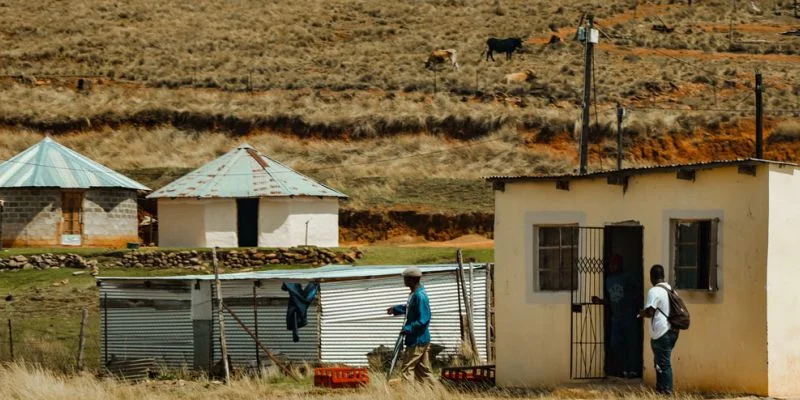
This country is big. For those who are unable to live in Harare because it is expensive, we have towns created by the government, growth points, small towns, and farms. The backlash was immediate. Critics accused him of targeting the poor, of failing to address the root causes of urban poverty — the housing shortages, the unemployment, the sky-high cost of living that drives people into the capital in the first place. An open letter from a political leader reminded the mayor that “a Zimbabwean does not become a refugee because he or she is poor”. But beneath the controversy lies an uncomfortable truth that too few are willing to confront: the mayor was not entirely wrong — he was just looking at the problem from the wrong end of the telescope. The issue is not that people should be forced out of Harare.
The issue is that for too long, economic opportunity has been concentrated in one city, forcing millions into cramped, under-serviced, and increasingly unliveable conditions. People did not come to Harare because they hate the rural areas. They came because that was where the jobs, the schools, the hospitals, and the markets were. But that is changing. And the change is being driven not by policy decrees, but by technology, necessity, and a new generation of Zimbabweans who are refusing to accept that a comfortable life must mean a congested one.
The Technology That Makes Rural Living Not Just Possible, But Preferable Three technological shifts have fundamentally altered the calculus of rural living in Zimbabwe: solar power, solar-powered boreholes, and satellite internet. Solar Power: Energy Independence for Every Home The unreliable electricity supply in urban Zimbabwe is no longer an inconvenience — it is a daily crisis. In Harare, residents “continue to spend more on gas and solar lighting, given the increasing unreliability of ZETDC to provide adequate power”. Businesses lose productivity. Hospitals postpone procedures. Students study by candlelight. But in rural areas, solar energy is not a backup — it is the primary power source. And it is becoming increasingly affordable. The People’s Own Savings Bank (POSB) has launched a US$8.7 million renewable energy and connectivity financing facility, specifically designed to provide schools, SMEs, and households with affordable financing for solar energy systems and Starlink internet. By 2027, the bank is targeting to power at least 400 schools, 2,700 households, and 400 SMEs.
For the first time, a rural homeowner can have consistent, reliable electricity without waiting for a grid connection that may never come. Solar panels, lithium batteries, and inverters are now within reach of ordinary Zimbabweans — and the payback period is shrinking with every tariff increase in the cities. Solar-Powered Boreholes: Water Security Without Council Dependence In Harare, households form co-operatives to drill boreholes because municipal water supplies have failed. But rural Zimbabwe is ahead of the curve. Solar-powered boreholes are transforming communities, providing reliable water for domestic use, irrigation, and livestock. A solar-powered borehole system typically costs between US$1,200 and US$2,500, depending on the specifications. For a rural household or small farming operation, this is not just a cost — it is an investment in self-sufficiency.
In Bubi District, a solar-powered borehole serving more than 90 households was completed at a cost of just over US$6,000, dramatically reducing the distance villagers had to travel for water. The implications for rural residential and agricultural investment are enormous. A rural property with its own water supply and solar-powered pump is not just a home — it is an independent, resilient living system that is immune to the failures of urban infrastructure. Starlink Internet: Working From Anywhere, Literally Perhaps the most transformative technology of all is Starlink. With download speeds above 300 Mbps and latency averaging 25–60 milliseconds, Starlink turns isolated rural locations into globally connected hubs. The Zimbabwean government has explicitly recognised that Starlink’s entry into the market is expected to result in “the deployment of high speed, low cost LEO internet infrastructure throughout Zimbabwe and particularly in all the rural areas”. Think about what this means. A software developer in Gokwe can work for a client in London. A graphic designer in Chipinge can serve a startup in Silicon Valley. A consultant in Murewa can join video conferences with teams in Johannesburg and Nairobi. The geographic constraints that once forced professionals into Harare or Bulawayo have been dissolved. You can now live comfortably in a rural township, work remotely for a global employer, power your home with the sun, draw your water from your own borehole, Cook with gas stoves and pay a fraction of what you would pay in the city — all while enjoying a higher quality of life. Why Investors Are Moving Into Rural Properties The smart money has already begun to move.
Across Zimbabwe’s rural growth points, district service centres, and small towns, a quiet property boom is underway — and it is driven by three converging trends. Residential Properties: The Affordability Advantage The single most compelling reason to invest in rural residential property is simple arithmetic. A larger property in a town like Norton or Chivhu may cost significantly less than a smaller property within Harare’s established suburbs. In Nyabira, stand prices start at just US$4,750 for 230 square metres, compared to what could easily be ten times that in a prime Harare suburb. But it is not just about price. It is about value. In a rural growth point, a US$30,000 investment can buy you a spacious home on a large plot, with room for a garden, a borehole, and solar panels. In Harare, the same amount buys a small cluster house in a congested suburb with unreliable water and electricity. For diaspora Zimbabweans especially, rural property represents an opportunity to own a tangible asset in their home country at a price point that is accessible and a quality of life that is aspirational. The Mazowe Corridor, for example, is drawing interest from buyers looking for peri-urban homes and agricultural plots. Commercial Properties: The First-Mover Advantage Here is where the opportunity becomes genuinely exciting. In Zimbabwe’s rural growth points, there is virtually no competition. Walk through a district service centre like Guruve, Mpandawana which is “rapidly transforming into a prime destination for both commercial and residential investment”.
Demand for stands has surged, driven by mining and agriculture value chain workers who need housing, retail, and services. But the supply of quality commercial space is almost non-existent. A small shopping centre. A hardware store. A pharmacy. A restaurant. A filling station. A guest lodge. These are the businesses that every growing rural centre needs — and in most cases, there is only one of each, if any at all. Want to buy or sell your Property Call Tich on 0771293450 The government’s Vision Incubator Model (VIAM) is making it easier than ever for investors to participate in rural development, with parcels of land in Village Business Units (VBUs) to be advertised and listed on stock exchanges, making “investing in rural development projects as easy as buying shares”. Big retailers like Pick n’ Pay are already procuring local products, guaranteeing markets for agricultural produce from these areas. Industrial Properties:
The Value-Addition Frontier Rural industrial property is the next frontier. As Zimbabwe shifts from raw material exports to value addition, rural areas are positioned to become processing hubs. Agricultural mechanisation, agro-processing, cold chain storage, and light manufacturing are all being actively promoted as part of Zimbabwe’s rural industrialisation agenda. The National Skills Audit revealed a skills deficit of 88 percent in the agriculture sector and 94 percent in engineering and technology. This is not a problem — it is an opportunity. For those with technical skills, rural Zimbabwe is a market waiting to be served. The Job Opportunities Nobody Is Talking About The narrative that rural areas are job deserts is outdated and dangerous. The truth is that rural Zimbabwe is a land of unmet demand — and where there is unmet demand, there are opportunities for those willing to seize them. Technical Trades: Mechanics, Electricians, Plumbers, Solar Installers Consider the story of Alice, a 21-year-old from Chiredzi District. A trained motor vehicle mechanic, Alice attended a specialised machinery repair course and expanded her practice into agricultural machinery. She now services three mechanisation service providers regularly, generating close to US$250 per month, and supports a further 24 providers on a retainer or on-call basis.
Alice’s story illustrates a simple truth: in rural Zimbabwe, technical skills are scarce, and those who have them can write their own ticket. Farmers and service providers “often faced costly breakdowns and prolonged downtime because few trained mechanics were available locally”. Every district needs welders, electricians, solar technicians, borehole mechanics, and construction specialists. Agriculture and Agribusiness: From Farmer to Entrepreneur The government’s Agriculture, Food Systems and Rural Transformation Strategy 2 (AFSRTS2) 2026–2030 aims to build a USD 15.8 billion agricultural industry. This is not just about farming — it is about building an entire value chain: seed production, irrigation, mechanisation, storage, processing, logistics, and marketing. The Village in Mwenezi, located in drought-prone Region Five, has demonstrated what is possible. Farmers there “now grow tomatoes, peppers, cabbages, onions, and green mealies, alongside livestock production,” transforming sandy soils into productive land through innovative farming practices. For young people with training in agricultural science, agribusiness, or veterinary services, rural Zimbabwe offers the chance to build something meaningful — and to be paid for it. The TAGDev 2.0 programme is equipping out-of-school youth in Manicaland with technical knowledge, business skills, and start-up support to strengthen agricultural enterprises. Remote Work: The Global Village Comes to the Village Perhaps the most underappreciated opportunity is remote work. With Starlink and solar power, a rural home becomes a fully equipped office. Graphic designers, software developers, virtual assistants, online tutors, content creators, accountants, and consultants can all work from rural growth points — earning in foreign currency while living on rural cost structures. The POSB’s Starlink financing facility means that even the upfront cost of equipment is no longer a barrier.
You can finance your solar system and Starlink kit through flexible repayment plans, then use your first few months of remote income to pay it off. The Benefits of Investing in Rural Zimbabwe: A Summary Let me distil the case into its essential components.
1. Affordability. Rural land and property are a fraction of urban prices. You get more space, more land, and more value for every dollar invested.
2. Self-sufficiency. Solar power and solar boreholes mean you are not dependent on failing urban infrastructure. Your lights stay on. Your fridge on, Your gas cooking, Your taps keep running.
3. Connectivity. Starlink provides high-speed internet that rivals or exceeds urban broadband, enabling remote work, online education, and telehealth.
4. Market Gap. Rural growth points lack commercial and industrial infrastructure. First movers capture markets that are years away from saturation.
5. Government Support. The Vision Incubator Model, POSB financing, and national rural industrialisation policies are actively incentivising rural investment.
6. Quality of Life. Clean air, open space, community connection, and a lower cost of living add up to a life that is not just cheaper, but genuinely better.
7. Appreciation Potential. As infrastructure improves and urban congestion worsens, rural property values are positioned for significant long-term growth. Land, as any seasoned investor will tell you, is the ultimate inflation hedge. The Mindset Shift That Changes Everything
The mayor of Harare was right about one thing: Harare cannot absorb unlimited migration. But the solution is not to tell people to go back to the village. The solution is to make the village a place worth going to. And that is exactly what is happening. The convergence of solar power, borehole technology, *Gas cooking and satellite internet has created a new model of rural living — one that combines the independence of self-sufficiency with the connectivity of the global economy. It is a model that offers freedom from failing councils, freedom from exorbitant rents, freedom from the daily grind of urban survival. The people who will build the new rural Zimbabwe are not refugees. They are pioneers. They are technicians and farmers, developers and remote workers, investors and entrepreneurs. They see what others have missed: that the future is not in the crowded, crumbling cities of the past, but in the connected, powered, self-sufficient communities of the future. The question is not whether rural Zimbabwe will boom. The question is whether you will be part of it. The land is there. The technology is there. The financing is there. The markets are waiting.
All that is missing is you.
Tich 0771293450is a real estate analyst and rural development advocate.
Source: The Great Rural Awakening: Why the Smartest Money Is Moving Out of Harare
COMMENTS