
Source: Banks disburse ZiG161m to productive sectors – herald
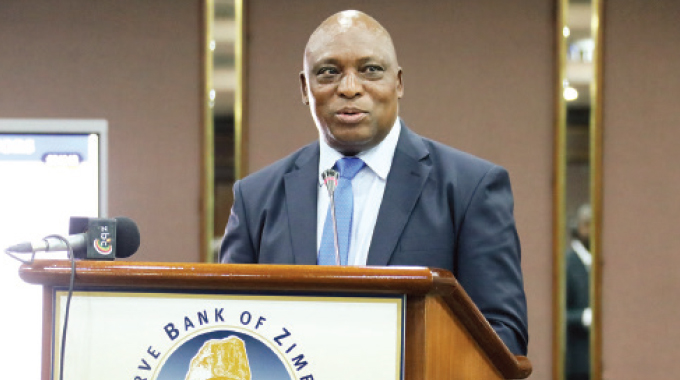
Banks have disbursed nearly ZiG161 million to productive sectors under the Targeted Finance Facility (TFF), Reserve Bank of Zimbabwe (RBZ) Governor Dr John Mushayavanhu has said.
Last month, the central bank launched the ZiG600 million concessional loan facility to address funding shortfalls in the country’s productive sectors following the realisation that commercial banks lacked sufficient capacity to meet the financial needs of industries critical to support economic expansion.
Dr Mushayavanhu said the beneficiaries were primarily businesses in the agriculture, manufacturing and retail sectors.
To access the funds, the central bank chief said participating banks undertake rigorous due diligence with their customers to ensure that only productive activities are eligible for funding.
“Regarding the remaining balance (of the facility), a significant portion has already been approved and is awaiting disbursement pending completion of due processes,” said Dr Mushayavanhu.
To curb excess liquidity, speculative behaviour and promote market discipline, the RBZ last year increased the bank policy rate to 35 percent and statutory reserve requirements to 30 percent for demand deposits and 15 percent for savings and fixed deposits in addition to other tightening measures.
The bank policy rate determines the threshold at which the central bank expects commercial banks to lend to the market, and given its tight monetary policy stance, this means that the apex bank sees the bank policy rate as restrictive to speculative borrowing.
Higher statutory reserves limit the amount of free funds financial institutions have at their disposal for ready lending to the market, helping keep a lid on excess liquidity that can potentially drive exchange instability and inflation.
However, these policy measures resulted in unintended consequences, including payment gridlocks due to tight liquidity, which threatened to choke economic activity.
To balance stability and growth, the RBZ launched the TFF, using its holdings from bank statutory reserves, to ease liquidity gridlocks and boost lending to productive sectors. The central bank set interest rates at 20 percent for banks borrowing funds under the targeted facility, and a maximum of 30 percent for on-lending to customers.
The prescribed 30 percent maximum lending rate for the TFF is below the average corporate lending rate of 43 percent per annum, according to the central bank.
The TFF loans have a maximum 270-day maturity and must be repaid in full by the due date or earlier.
Borrowers can access funds in the local currency, the Zimbabwe Gold (ZiG), and have the option to repay in the same currency or foreign currency at the prevailing exchange rate.
The interest rate structure is designed to strike a balance between affordability for borrowers and responsible risk management for lenders.
To maintain transparency and affordability, no additional charges are permitted.
The TFF has stringent collateral requirements, demanding acceptable security from banks and can be secured by a diverse range of assets and instruments.
These include foreign currency, Gold-backed Digital Tokens or any other central bank instruments, foreign currency-denominated Treasury Bills with less than one year to maturity, local currency Treasury Bills with less than one year to maturity and any other collateral acceptable to the RBZ.
The RBZ has stressed the importance of aligning loan sizes and repayment terms with the specific business cycles of borrowers to maximise the facility’s impact.
Disbursement of funds is contingent upon the perfection of collateral, a process the RBZ pledged to complete within 72 hours for standard securities.
To ensure the effectiveness of the TFF in supporting productive sectors, those requiring foreign currency would be able to access the money on the interbank foreign market.
The central bank believes the TFF will go some way to enhance liquidity in the market, which has been partly affected by low activity in the interbank market.
Lack of trading on the interbank market necessitated the Reserve Bank to accommodate individual banks in short positions, instead of settling the net market positions through its lender of last resort function.
With the economy projected to grow by an impressive 6 percent in 2025, ensuring adequate funding for working capital has become paramount.
COMMENTS