
Source: The Herald – Breaking news.
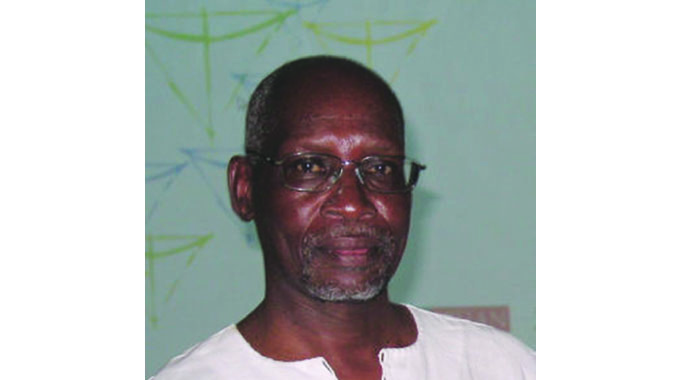
Zvamaida Murwira Senior Reporter
Prof Munjeri, a specialist in culture and heritage studies, died on Monday after a long illness.
In a statement, the President described Prof Munjeri as an African intellectual of world repute.
“I was deeply touched and saddened to learn of the passing on of Professor Dawson Munjeri on Monday evening, April 29, after a long illness.
He said for his tremendous contribution, Prof Munjeri had been accorded a State-assisted funeral.
“On behalf of the ruling party, ZANU PF, Government, our community of scholars and researchers, my family and indeed on my behalf, I want to express my deepest, heartfelt condolences to the Munjeri Family, to his children and grandchildren especially.
“May they be consoled by the late departed’s meritorious contribution to our nation, and to greater humanity as an international worker. To that end, Government has seen it fit to accord Professor Munjeri a State-assisted funeral. May our ever-loving God rest him in eternal peace,” he said.
“The high point of his career came when he became President of the 17th General Assembly of State Parties to UNESCO’s World Heritage Convention which ran from 2009 to 2010 under his able stewardship.
“Zimbabwe joined the world in celebrating her national and her home-grown scholar and researcher whose demise this last Monday threw those of us who knew his capabilities as a scholar, and had the privilege of working closely with him, into utter distress,” said President Mnangagwa.
“Our nation has lost one of its choicest sons gifted with rare intellect. Upon retirement from UNESCO, Professor Munjeri came back home to resume his career in the academia and, more broadly, in nation-building.
He said Government relied on his great expertise.
“What makes Professor Munjeri’s passing on most poignant and particularly painful is that he left us at a time when my Government has embarked on many programmes to raise the nation’s consciousness of national and African history through heritage studies, and on a broad-based rehabilitation of historical personages and heritage sites, a thrust exemplified by the recent rehabilitation of the iconic site at Pupu, and of course the ongoing construction of a regional museum dedicated to the celebration of African liberation struggles,” he said.
“Indeed our history and our material culture are key pillars in the reconstruction of our collective identity as Zimbabweans, and in consolidating our sovereign statehood. They must become a material force in our nation-building efforts and transformation towards Vision 2030.”
His interdisciplinary approach and open personality, throughout his professional career and life, inspired numerous heritage practitioners and professionals in the world.
Prof Munjeri’s 53 books and numerous other articles explored oral traditions and oral history, museology; tangible and intangible heritage, legal frameworks on heritage and sustainable development.
He shared his extensive knowledge and passion for heritage with the world at large, contributing to scholarly debate on culture and heritage studies.
COMMENTS