
Source: Soya import bill reaches $172 million | The Financial Gazette September 28, 2017
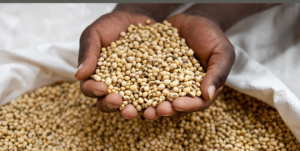
Zimbabwe is currently importing $5 million worth of soya bean from South Africa and Malawi.
SOYA bean imports last year drained $172 million from the fiscus, with farmers failing to meet demand from the country’s oil expressers. Zimbabwe currently produces 30 000 tonnes of soya beans, against demand of about 150 000 tonnes.
, $119 million worth of crude oil from South Africa and soya meal valued at $47,3 million from Zambia. Statistics released at the Confederation of industries (CZI) during a validation workshop last week, indicates that Zimbabwe consumes between 8 000 and 10 000 litres of edible oils every month.
Oil expressers require 600 000 tonnes annually. Of this, 20 percent is for oil, while 80 percent is used for stock feed manufacturing. A study by Gibson Chigumira of the Zimbabwe Economic Policy Analysis and Research indicates that the country has the capacity to reduce the $172 million import bill for soya bean, crude oil and soya meal for livestock by producing enough to meet annual demand. “Soya production has strong industry linkages.
The crop supports processing of value added products such as soya bean cake, soymilk, soya yoghurts, flour, margarine and soya beans oil. Soya bean produces 30 percent of cooking oil nationally, and its oilcake, which is a by-product of oil extraction, is sold to feed manufacturers,” Chigumira said. Industry experts note that the country had never produced enough soya beans with the largest crop of 135 000 tonnes being produced in 2000.
“The production side of the crop is the key to unlock the value of soya beans. Farmer productivity is critical for the value chain. The farmer simply has to produce. Low yield per hectare and associated costs, results in a higher required breakeven price making soya an unattractive crop to farm and when break-even price is greater than the import parity price it becomes viable for processors to import than support local production,” Chigumira added.
Soya bean yield in Zimbabwe can go up to four tonnes per hectare but currently the small scale farmers (A1 and A2), who took over from former large scale producers, are averaging 1,5 tonnes per hectare. CZI said the resuscitation of the soya value chain was strategic in the development agro-industrial value chains. Prices of soya beans in the region range from $350 to $400 per tonne, while in Zimbabwe, government set the buying price of the oilseed at $610 per tonne with the intention of increasing the price to $780 per tonne.
Demand for soya beans largely comes from the crushing or processing industries, which are currently at 16 percent crushing capacity utilisation owing to poor supply of soya bean and foreign currency shortages for imports. “The crushing capacity now is almost zero, but the industry has a crushing capacity of almost 600 000 tonnes,” Olivine Industries acting general manager, Solomon Madondo said. Government is targeting 150 000 tonnes of soya bean during the 2017/18 season.
COMMENTS