
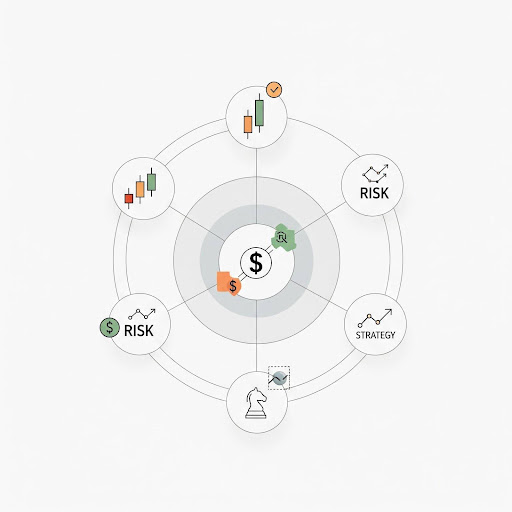
The market offers two main entry points for profit-seeking investors known as prop trading and retail trading. Prop trading and retail trading exist as distinct trading approaches that differ from each other. Choosing the correct trading approach depends on your experience level and financial means and personal objectives. If you’re ready to explore new trading opportunities, you might want to try Funding Rock, a prop trading firm designed for both beginners and experienced traders.
What Is Retail Trading?
The majority of ordinary people start trading through retail trading because it serves as their standard entry point. Through retail trading you create an account with brokerages such as Robinhood or Interactive Brokers and invest your funds to purchase stocks forex or crypto. All trading decisions rest with you and you retain full profit benefits yet you bear complete responsibility for losses.
Most retail traders use easy-to-understand trading platforms. Users can analyze charts and place trades and manage their investments using these platforms through their computers and mobile devices. People choose retail trading because it allows easy entry without requiring exams or supervising authorities. However, you must exercise caution since trading with your own money means potential financial losses can directly affect your personal finances.
What Is Prop Trading?
Prop trading (short for proprietary trading) is different. Prop trading allows traders to invest in the firm’s funds rather than their personal money. Prop firms like Funding Rock actively seek traders who demonstrate both rule adherence and effective risk management and consistent profit generation. Before joining most prop firms you need to succeed in their evaluation process known as the “challenge” which requires you to prove your trading ability and adherence to trading rules.
After passing the test the company establishes a funded account for you. The trading firm obtains the majority of profits while you maintain a portion of the earnings. The platform provides you with advanced technology alongside trader community membership and possibly educational training sessions. Your main advantage involves protecting your personal assets because you can accelerate your growth by having access to increased capital.
Key Differences Between Prop Trading and Retail Trading
The fundamental distinctions between these two trading approaches form the main difference between them. Here’s a simple breakdown:
Funding and Capital
Retail trading: You trade with your own money. The amount of $1,000 represents your maximum trading capacity. Your ability to trade larger quantities depends on your ability to accumulate more funds.
Prop trading: You trade with the firm’s money. Success in their evaluation process allows you to access trading capital that could reach $10,000 or extend to $50,000 or higher amounts. The additional capital enables you to grow at an accelerated rate.
Risk and Reward
Retail trading: All the risk is yours. The responsibility for any financial losses belongs to you personally. Your success in trading allows you to maintain all of your profits.
Prop trading: The risk is shared. Your position at the firm becomes at risk when you experience losses but your personal savings remain untouched. Profits earned through trading are divided between you and the firm when you succeed.
Tools and Resources
Retail trading: Most platforms are simple and made for beginners. The cost for sophisticated tools remains an option.
Prop trading: The majority of prop firms offer traders professional-grade tools combined with immediate data and assistance from seasoned trading professionals. The platform provides coaching services together with webinars and membership access to a community of traders.
Rules and Requirements
Retail trading: You’re free to trade how and when you want. The system lacks any mechanism for reviewing your strategy or assessing your results.
Prop trading: You must demonstrate your ability to generate profits while respecting risk parameters through a challenge before becoming eligible. Once you complete the evaluation you must adhere to the firm’s established rules for your funded trading account to remain active.
Opportunities for Growth
Account growth determines your rate of development in retail trading operations. The responsibility for learning rests with you yet your mistakes will result in financial expenses.
The ability to grow faster exists for prop traders who start with more capital and receive institutional backing. Prop trading allows you to gain insights from others and receive assistance during difficulties while offering opportunities for career advancement or account growth when you achieve successful results.
Which One Is Right for You?
Your decision between retail trading and prop trading should be based on your current circumstances.
- Do you have enough money to start on your own?
- You must decide whether to handle every risk by yourself or seek distribution of its burden.
- The choice exists between independent trading or working with support during your learning process.
- The willingness to maintain compliance with rules and successfully complete an assessment.
A range of resources exists to assist traders in selecting their broker through which they can determine their suitable retail trading approach.
Conclusion
Prop trading and retail trading provide legitimate opportunities for earning money along with trading skill development yet they present entirely distinct paths for traders. You have complete control over retail trading but you need to handle all the potential risks. Prop trading gives traders access to larger capital while providing support along with safety features yet they need to maintain firm guidelines and demonstrate their abilities before advancing. Devote time to assess your objectives and the level of support you require. Funding Rock offers a platform for prop traders to evaluate their programs by experiencing their trading programs as a user.
COMMENTS