
Source: WATER WOES DRIVE COMMUNITY-LED BOREHOLES | The Sunday Mail

Tendai Chara
ERRATIC water supply in Harare has forced many residents to think creatively about long-term solutions to the crisis.
Numerous households, particularly in areas like Tafara, Mabvuku and Chitungwiza, have not received tap water for decades. Despite this, they continue to be billed by authorities for a service that is not being provided.
However, this adversity has led some residents to develop innovative solutions to address the water shortage.
Fungisai Nyemba, a resident of Glen View Area 8 in Harare, no longer spends hours queuing at communal boreholes.
Thanks to a community-driven initiative, residents pooled their resources to drill a borehole and instal a tap directly at her doorstep.
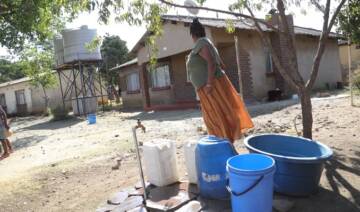
“In the past, we would have to wake up as early as 4am to wait in line for water. Now, I simply turn on the tap and enjoy clean, uncontaminated water,” she said.
Nyemba and her neighbours, like many other Harare residents, collectively funded the drilling of a borehole. They also acquired and installed water tanks and laid water pipes, ensuring easy access to running water for all group-members’ households in the area.
Malcolm Vhori, the chairperson of a community group on 117 Crescent in Glen View 8, described how his group overcame the water crisis.
“As a community, we decided to come together and contribute funds to drill a borehole and instal water taps for participating households. Each household contributed US$172,” the youthful Vhori explained.
“With the support of our councillor, we obtained a permit from the Upper Manyame Sub-Catchment Council to drill the borehole.”
The group consists of 42 members who made their payments in three convenient instalments. For Anesu Muchenje, a local resident who is part of Vhori’s group, the borehole has been a game-changer.
“For the past three weeks, our council taps have been dry. When water is available, it is often visibly dirty (contaminated) and has a greenish colour.
“Having access to water allows me to better manage my time and even grow vegetables,” said Muchenje.
She feels the water from the community borehole is safe.
“The water source is tested by the permitting authority and the borehole is equipped with an inline chlorinator for purification. We have said goodbye to Harare’s dirty, contaminated water,” explained Muchenje.
Despite no longer using council water, members of the group are still paying their rates.
“We will soon discuss a plan to disconnect from the council water system entirely,” she added.
Many households in Harare have disconnected from the municipal water supply due to prolonged periods of water scarcity.
Ownership
To ensure the borehole remains collectively owned by the community, each individual member is required to sign an affidavit declaring partial ownership of the water source, including associated equipment like water tanks, purifying machines and pumps.
Residents explain that this measure protects the project from unscrupulous individuals who may attempt to eventually claim ownership of the community scheme.
“Everyone must sign legal documents clearly stating that the project belongs to the community, not to any single person,” Charles Makota, a member of another group that established a borehole in Budiriro, said.
“This prevents those with ill intentions from taking advantage of the situation.”
Precious Shumba, the executive director of the Harare Residents Trust (HRT), praised the community initiative and encouraged others to follow suit.
“This is an innovative approach to addressing the water shortages plaguing Harare. By adopting this approach, we can conserve underground water, which is at risk of depletion due to the proliferation of boreholes, at times unapproved, in residential areas,” notes Shumba.
He warned that if residents do not collaborate, their individual boreholes may eventually run dry. The HRT has not received any reports of contaminated borehole water from the interconnected households.
Application procedures
According to Ivy Chibanda, the public relations officer for the Upper Manyame Sub-Catchment Council, anyone wishing to drill a borehole must first obtain permission from the council.
The application process involves submitting an application form, along with documents proving property ownership and a statutory application fee.
Chibanda explained that obtaining permission ensures public health safety by requiring boreholes to be located away from pollution sources, adhere to council regulations and promote water conservation through regulated groundwater use.
She encouraged residents to adopt the shared community borehole model.
“The sub-catchment council supports community-based water management, water conservation and equitable access to this vital resource through shared community boreholes,” said Chibanda.
The Upper Manyame Sub-Catchment Council official urged residents to register their boreholes, have their water tested regularly and report any illegal borehole drilling or bulk water sales from residential properties.
She expressed concern about some residents who are drilling boreholes without proper authorisation.
This, she notes, poses significant risks, including access to contaminated water, groundwater over-extraction and disputes.
To address this issue, the sub-catchment council regularly conducts awareness campaigns, door-to-door inspections and imposes statutory penalties for non-compliance with regulations.
Misconception
Contrary to popular belief, the Zimbabwe National Water Authority (Zinwa) and the Harare City Council do not regulate the operation of boreholes in the capital. Tsungirirai Shoriwa, the Zinwa corporate communications officer, clarified this misconception.
“The Water Act stipulates that boreholes are regulated by sub-catchment areas, not by Zinwa. The authority (Zinwa) only assists councils when they fail to fulfil their responsibilities,” said Shoriwa.
Zimbabwe is divided into seven catchment areas, namely Manyame, Save, Umzingwane, Gwayi, Sanyati, Runde and Mazowe.
These catchment areas are further divided into sub-catchment councils, comprised of stakeholders such as councils, farmers and miners. In total, there are 47 sub-catchment councils in the country.
The drilling of community boreholes by the residents is complementing the Presidential Borehole Drilling Scheme, launched in 2021 to improve community access to clean water.
The Presidential Borehole Drilling Scheme seeks to provide access to clean water for both rural and urban communities.
More than 3 000 boreholes have so far been drilled countrywide under the ambitious cheme.
Residential boreholes are also emerging as a viable solution, offering cost-effectiveness, self-sufficiency and environmental benefits.
Irresponsible
Some residents are expressing concerns about the irresponsible water usage by those who own community boreholes.
“Some are using hosepipes to water their gardens, despite the current ban,” said Miriam Maringe of Mbare.
Similarly, bogus drilling companies and water surveyors are taking advantage of the high demand for water by defrauding residents. For some residents, the search for water has proven fruitless due to dry holes drilled by fake and unqualified drilling companies.
Harare City Council spokesperson Stanley Gama note most of the boreholes being drilled in the capital city are contaminated.
He urged residents who have drilled boreholes to purify the water.
“Issues related to boreholes are handled by Zinwa and sub-catchment councils. I can only say that borehole water in Harare is not 100 percent safe.
“I encourage residents to visit our health department to obtain water purification pills,” said Gama.
Chitungwiza is currently facing a
severe water crisis following the decommissioning of the Prince Edward water treatment plant at the end of August by the City of Harare.
The plant’s closure was caused by the drying up of the twin dams, Harava and Seke Dam, which supplied it with water.
COMMENTS