CONSTITUTIONAL Amendment Bill Number 3, tabled in the National Assembly yesterday, seeks to introduce reforms that will reinforce constitutional governance and strengthen the country’s democracy, Justice, Legal and Parliamentary Affairs Minister Ziyambi Ziyambi said.
He made the remarks while tabling the Bill, which was read for the first time in the House.
“Mr Speaker, I rise to present the Constitution of Zimbabwe, Amendment No. 3, Bill of 2026. The Bill, Mr Speaker, introduces a set of constructive reforms that, taken together, reinforce constitutional governance, strengthen democratic structures, clarify institutional mandates and harmonise Zimbabwe’s constitutional order with tested and successful practices in other progressive jurisdictions,” Minister Ziyambi said.
He spoke before the Bill was read for the first time by the Clerk of Parliament, Mr Kennedy Chokuda.
Speaking to journalists after tabling the Bill, Minister Ziyambi said Parliamentary processes were now in full swing.
“The parliamentary process is now on, and hopefully tomorrow (today) we will start the process and get to the comments (from MPs). Thereafter, I think we should be able to conclude it and we are geared up to conclude the process,” he said.
Asked about the voting process to be used for the adoption of the Bill, the minister said the process would be carried out in accordance with the provisions of the law.
“The Speaker will be guided by the provisions of the Constitution as he steers the Bill through Parliament. So don’t worry, the Speaker will abide by each and every provision in the Constitution as we deliberate on it,” Minister Ziyambi said.
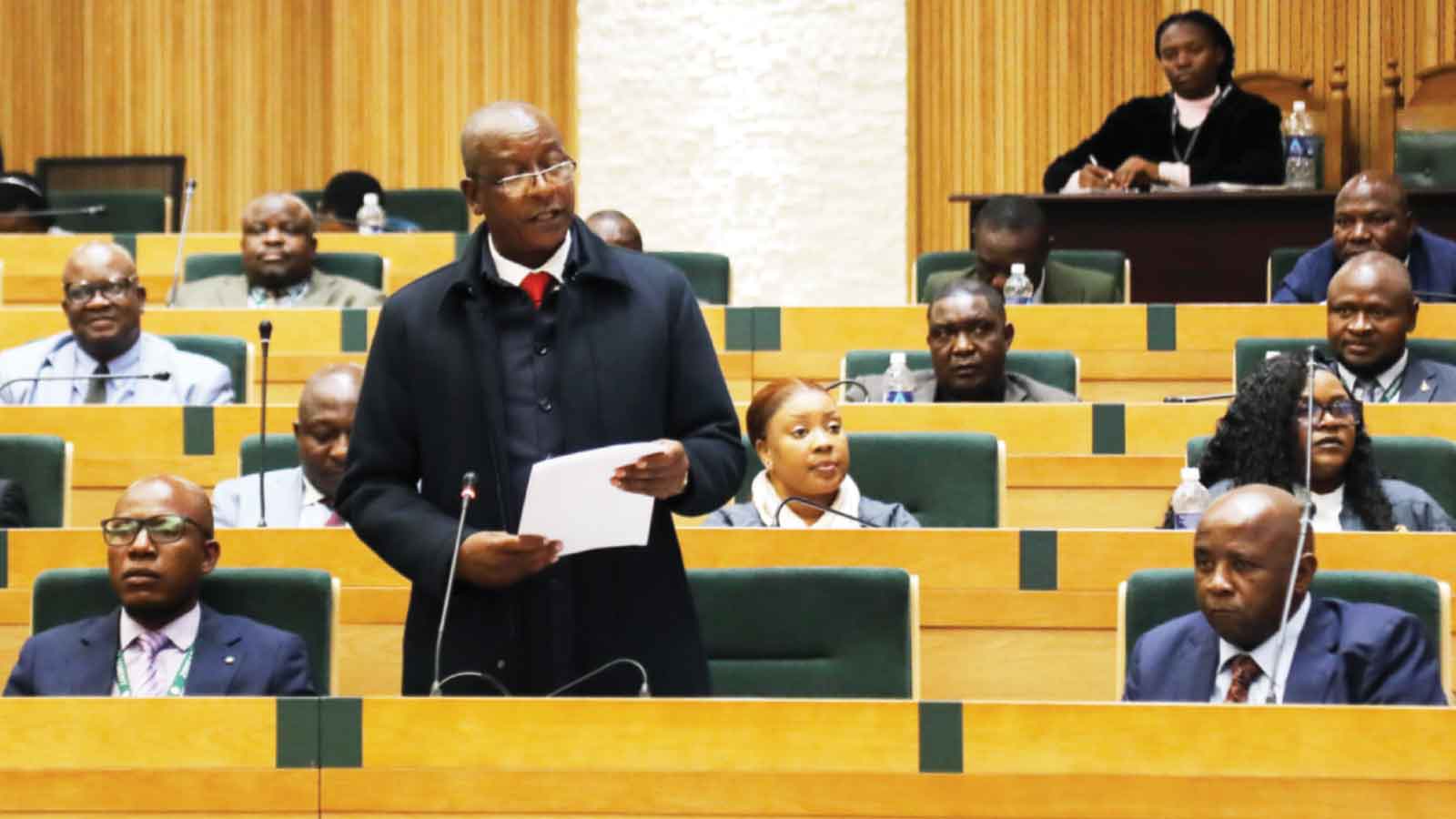
Justice, Legal and Parliamentary Affairs Minister Ziyambi Ziyambi reads Constitutional Amendment Bill Number 3 for the first time in Parliament yesterday. – Picture: Memory Mangombe
He also commended the overwhelming public response in airing views on the Bill during the 90-day consultation period.
“I’m told it was quite overwhelming, the support was excellent, and we received several submissions written, over 500 000, besides the oral submissions that were done and others that came via email.
“So, I believe this is also extremely historic in that submissions that we got far exceed any other bill that we have ever done in Parliament,” he said.
The Bill was gazetted on February 16 and underwent 90 days of public consultations led by the Portfolio Committee on Justice, Legal and Parliamentary Affairs. These included physical meetings held between March 31 and April 2, as well as written submissions.
President Mnangagwa recently expressed satisfaction with the public hearings, saying all parts of the country had been allowed to express themselves.
In an interview, Parliamentary Portfolio Committee on Justice, Legal and Parliamentary Affairs, chairman Cde Eddison Zvobgo (Jr), said they will present their report on the Bill today.
“Remember that the report from the Committee of Justice, Legal and Parliamentary Affairs is for the information of parliamentarians so that they can debate fully armed with the views of the Zimbabwean people.
“So, that is the purpose and we will provide that report to them.
“The whole process should be completed definitely by the end of June, as the Minister indicated.”
“Again, we want people, the MPs, to know what the various sectors think, what the youth think about a particular issue, what the women think about a particular issue.
“We want members of Parliament to be fully armed with the views of the Zimbabwean people before they enter the debate,” he said.
Some of the changes proposed in the Bill include a parliamentary process for the election of the President, seeking to replace the current five-year term with a seven-year tenure.
The Bill also transfers responsibility for registering voters, compiling and maintaining the voters’ roll and registers from the Zimbabwe Electoral Commission to the Office of the Registrar-General.
It further empowers the President to appoint 10 senators, raising the total number to 90, in order to bring in broader technical expertise, enhance parliamentary oversight, expand the pool of potential ministers, build public confidence, and help reduce political and social divisions.
The Bill also provides for the creation of a Zimbabwe Electoral Delimitation Commission to address concerns about the Zimbabwe Electoral Commission’s dual role in drawing electoral boundaries and to promote good governance and institutional integrity.
Additionally, the Bill would disband the Zimbabwe Gender Commission and merge its functions with those of the Zimbabwe Human Rights Commission.

COMMENTS