
Source: Women lead rural economic revival in Bubi-Lupane – herald
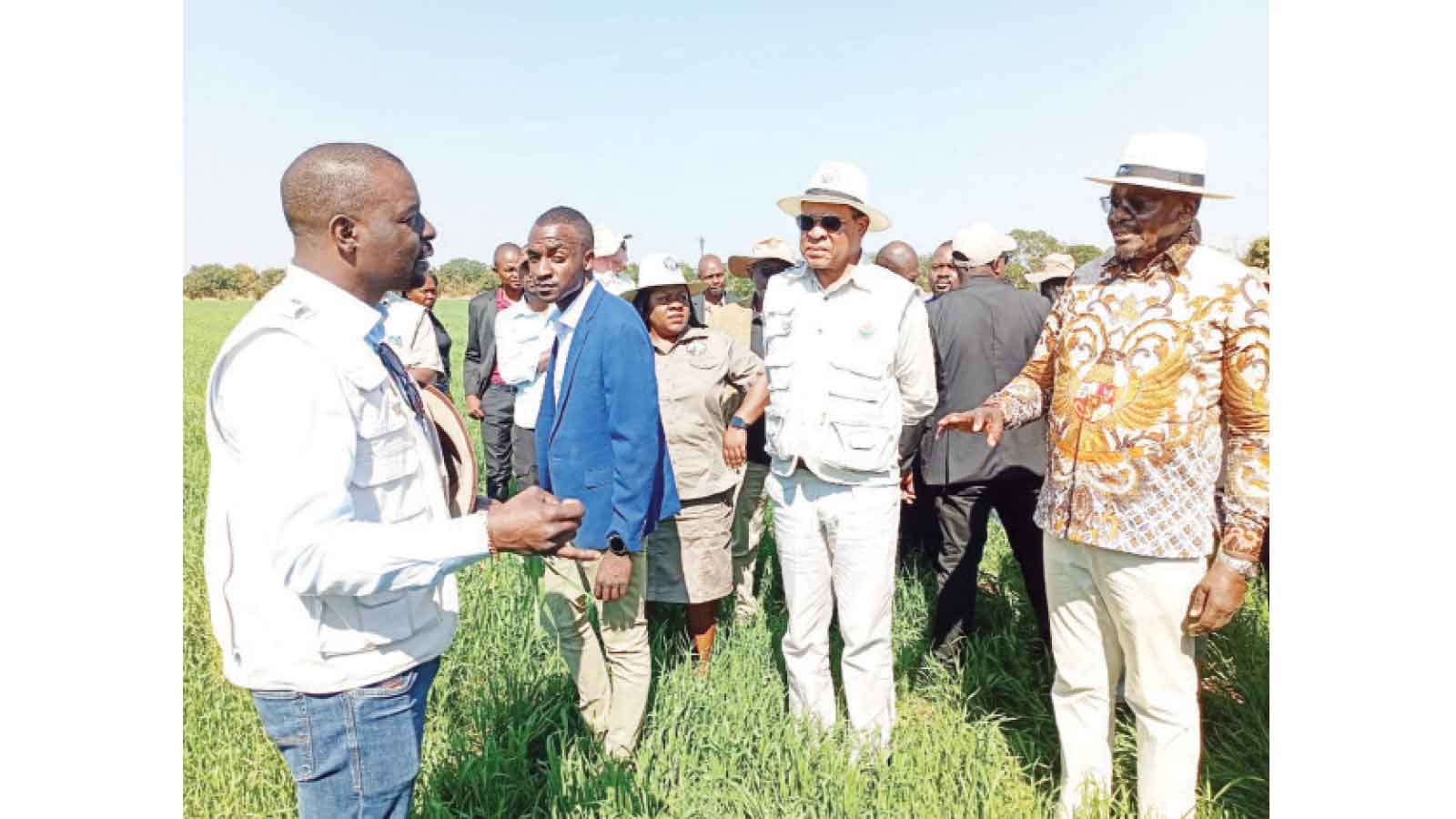 Vice President Kembo Mohadi (right) listens to ARDA chief executive Mr Tinotenda Mhiko (left), while Agriculture, Mechanisation and Water Resources Development Minister Dr Anxious Masuka (centre) looks on during a tour of the Bubi-Lupane Irrigation Scheme yesterday.
Raymond Jaravaza
WHAT was once barren land in drought-prone Lupane has become a thriving economic hub where more than 90 communal farmers — most of them women — are earning incomes, creating sustainable livelihoods and driving rural industrialisation through year-round crop production under the Bubi-Lupane Irrigation Scheme.
The 200-hectare irrigation scheme, commissioned by President Mnangagwa in 2021 after the revival of a decades-old project, is demonstrating how irrigation can serve as the foundation of rural industrialisation by creating employment, improving household incomes, strengthening food security and laying the groundwork for agro-based industries in line with the Second Republic’s Vision 2030 development agenda.
Among the 90 plot holders are 52 women and 38 men, who have been increasingly contributing to the country’s strategic cereal reserves over the past four years. Working in partnership with the Agricultural and Rural Development Authority (ARDA), they have successfully shifted from subsistence to commercial farming, a transformation that has improved livelihoods and restored hope in the semi-arid district.
To safeguard the gains being realised by farmers, Government has assured winter wheat producers that essential services such as electricity and water will not be disconnected because of outstanding bills before the crop is harvested.
The reassurance was given by Vice President Kembo Mohadi during an address yesterday to villagers and farmers at the Bubi-Lupane Irrigation Scheme in Matabeleland North Province.
Vice President Mohadi said he had been assured by officials from ZESA and Zimbabwe National Water Authority (ZINWA) that power and water supply will not be cut off due to unpaid debts.
“Water and electricity supply will not be cut off before your wheat is harvested as we cannot allow a situation where farmers lose their entire crops because it was not irrigated,” he said.
“We have agreed with ZESA and ZINWA to come up with flexible payment plans so that farmers can pay their debts after harvesting.
“Government is happy with the success of the Bubi-Lupane Irrigation Scheme, one of the pioneer projects that were revived by the Second Republic under the leadership of President Mnangagwa,” said Vice President Mohadi.
He said that before he made his way to the irrigation scheme, he passed by the Bubi-Lupane Dam, where irrigation water is drawn from.
VP Mohadi said villagers should channel their grievances and challenges through the Minister of State for Matabeleland North Provincial Affairs and Devolution, Richard Moyo.
“Minister Moyo is the eyes and ears of the President here in Matabeleland North Province. So, when you have issues you feel the Government must address, utilise his offices,” he said.
“As your leaders, we cannot know everything that needs our attention. Through his office, Government will take appropriate action to solve the challenges that we might be facing as villagers of Lupane.”
The event was also attended by Minister of Agriculture, Mechanisation and Water Resources Development Dr Anxious Masuka, Agricultural and Rural Development Authority chief executive (ARDA) Mr Tinotenda Mhiko, senior Government officials and local traditional leadership.
Scheme chairperson, Mrs Sinikiwe Moyo (53), said they expect an average yield of four tonnes per hectare.
“We managed to plant 116 hectares of winter wheat and are optimistic about harvesting four tonnes per hectare. This is an all-year-round project where we also grow maize, butternut and sugar beans,” she said. The scheme sources its water from the Bubi-Lupane Dam, although breakdowns of pumping infrastructure remain a concern.
“Whenever a major feeder pipe bursts, we have to call in the Zimbabwe National Water Authority (ZINWA) to repair it. That slows us down, but we push on,” added Mrs Moyo. ARDA chief executive, Mr Mhiko said a steady supply of electricity was critical to thriving winter wheat.
“Winter wheat must be irrigated consistently and we would like to thank ZESA for ensuring a steady supply of electricity across the country, a situation that benefits winter wheat farmers,” he said.
Newer Post
VP Chiwenga turns 70 years Older Post
Cells revolutionary party’s core foundation
COMMENTS